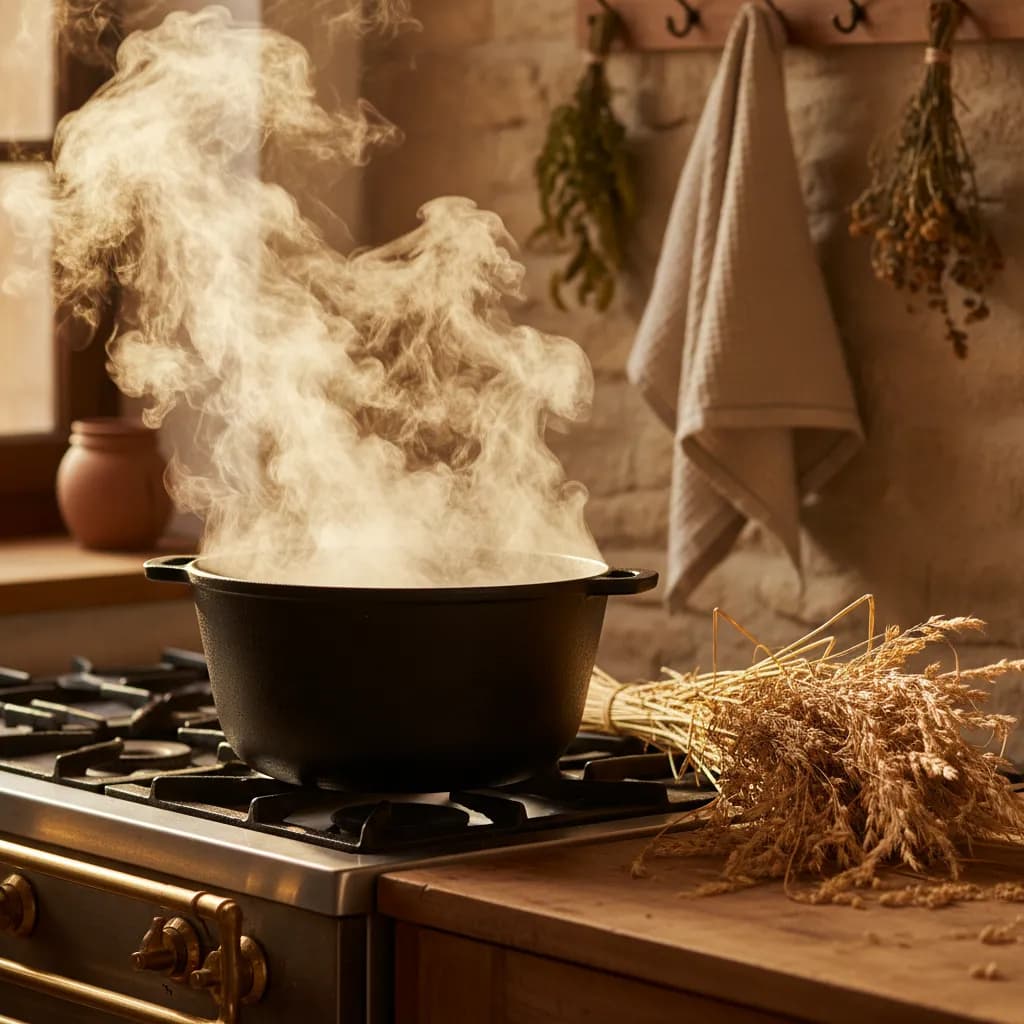
Straw is one of the most popular substrates for oyster mushrooms — it's cheap, widely available across Canada, and produces excellent yields. But raw straw is full of competing organisms that will outcompete your mushroom mycelium if left untreated.
Pasteurization kills most of these competitors while leaving behind beneficial microorganisms that actually help resist contamination. Here are the two most common methods.
Method 1: Hot Water Pasteurization
This is the standard approach used by most small-scale growers. It's fast, reliable, and requires no chemicals.
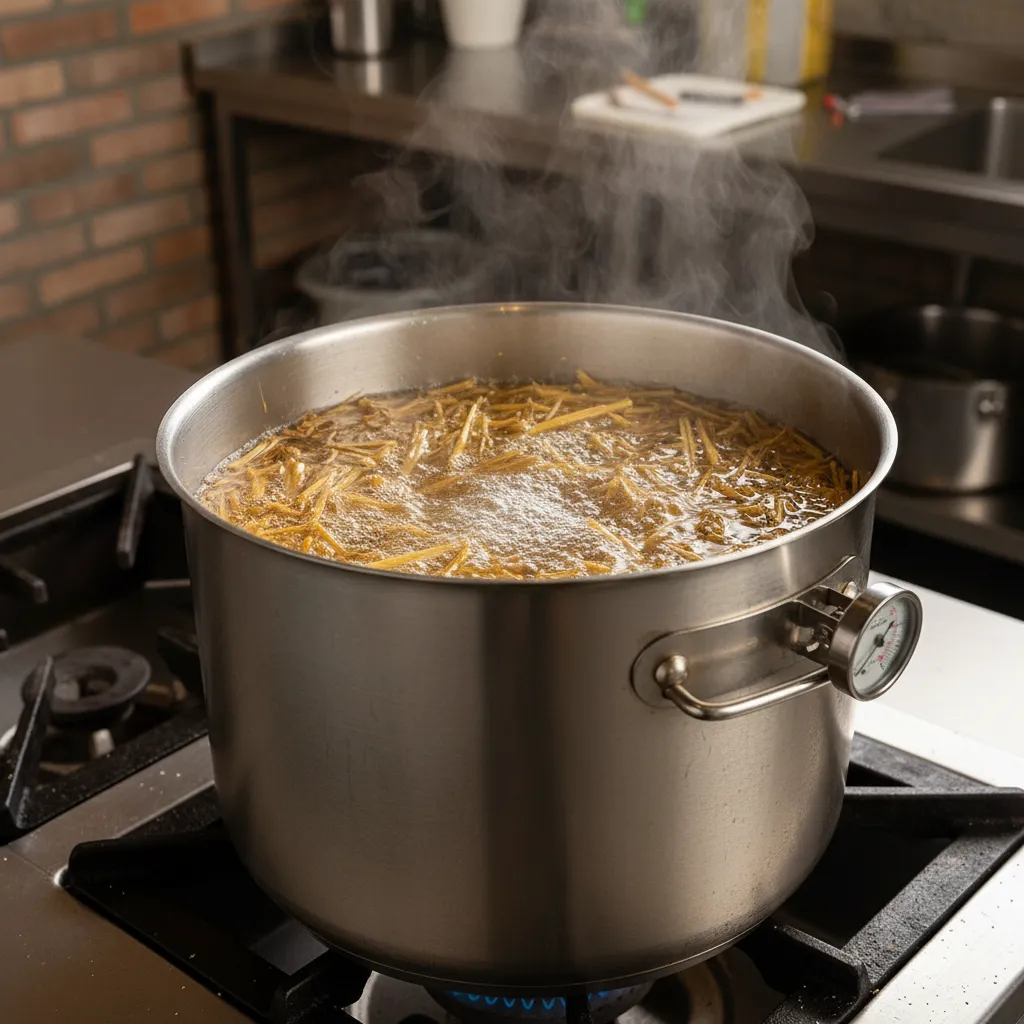
What You Need
- Chopped straw (cut to 2-4 inch lengths)
- Large pot, barrel, or cooler
- Thermometer
- Heat source (propane burner works well for large batches)
- Mesh bag or laundry bag
- Grow bags or containers for spawning
Step-by-Step
1. Chop the straw. Cut or shred straw to 2-4 inch pieces. Shorter pieces pack better and colonize faster. A string trimmer in a garbage can works well for small batches. You can also run over it with a lawn mower.
2. Bag the straw. Load chopped straw into a mesh bag or pillowcase. This makes it easy to submerge and remove from the hot water.
3. Heat the water. Fill your vessel with water and heat to 71-82°C (160-180°F). You need enough water to fully submerge the straw.
4. Submerge and hold. Place the bagged straw into the hot water. Maintain the temperature between 71-82°C for 60 minutes. Use a thermometer to check regularly. If using a cooler, preheat it with boiling water first — the insulation will hold temperature well.
5. Drain and cool. Remove the straw and hang or spread it out on a clean surface to drain and cool. The straw should be moist but not dripping — think of a wrung-out sponge. It's ready to use when it cools to below 27°C (80°F).
6. Spawn. Mix in your oyster mushroom spawn at 10-20% by dry weight of the straw. Load into grow bags, buckets, or tubes. Not sure how much straw to prepare for your batch? Our Bulk Substrate Calculator helps you figure out the right quantities before you start.
Tips for Hot Water Pasteurization
- Don't exceed 82°C — you want pasteurization, not sterilization. Killing everything removes the beneficial bacteria that protect against contamination.
- A propane turkey fryer and large pot is one of the most practical setups for home growers.
- Process straw the same day you plan to spawn it. Don't let pasteurized straw sit overnight.
Digital Kitchen Scale
Accurate measurements are the difference between perfectly pasteurized straw and a soggy mess. This scale handles everything from weighing lime to measuring spawn ratios.
View on Amazon.ca →When you buy through our links, it supports our mycology research at no extra cost to you.
Method 2: Cold Water Lime Pasteurization
This method uses hydrated lime (calcium hydroxide) to raise the pH of the water, killing competitors without any heat. It's ideal if you don't have a heat source for large batches or prefer a simpler process.
What You Need
- Chopped straw
- Large container (barrel, tote, or stock tank)
- Hydrated lime (calcium hydroxide) — available at building supply stores
- Water
- pH test strips (optional but helpful)
Step-by-Step
1. Chop the straw. Same as above — 2-4 inch pieces.
2. Prepare the lime bath. Fill your container with cold water. Add hydrated lime at a rate of approximately 1-2 grams per litre of water (roughly 1/3 cup per 40 litres). Stir well. The target pH is 11-12. If you have pH strips, test to confirm.
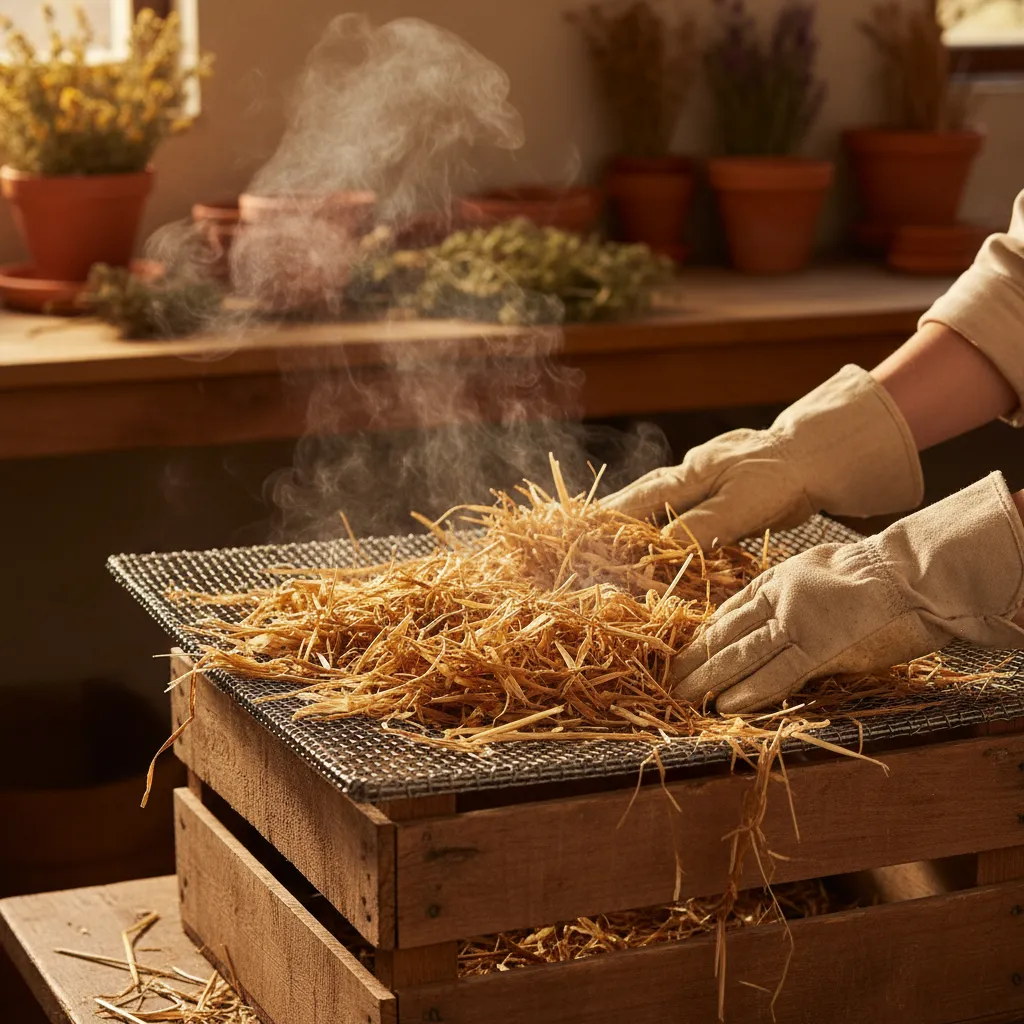
3. Submerge the straw. Push the straw down into the lime water, weighing it down so it stays fully submerged. Ensure all straw is below the water line.
4. Soak for 18-24 hours. Leave the straw submerged at room temperature. The high pH environment kills most contaminants. Don't exceed 24 hours.
5. Drain and drip. Remove the straw, drain thoroughly, and allow excess water to drip off for several hours. The straw should feel moist but not waterlogged.
6. Spawn. Same process as hot water — mix in spawn and load into your growing containers.
Tips for Cold Water Lime
- Wear nitrile gloves when handling hydrated lime — it's caustic at high concentrations.
- The residual lime on the straw is not a problem. It actually helps maintain a slightly alkaline environment that favours mushroom mycelium over competitors.
- This method works best in warmer months (above 15°C ambient temperature).
Which Oyster Species Work Best on Straw?
Straw is primarily an oyster mushroom substrate. Other species generally prefer hardwood-based substrates.
| Species | Performance on Straw |
|---|---|
| Blue Oyster | Excellent — the classic straw mushroom |
| Pink Oyster | Excellent — fast colonization |
| Pearl Oyster | Excellent |
| King Oyster | Poor — prefers supplemented hardwood |
| Lion's Mane | Poor — needs hardwood |
| Shiitake | Poor — needs hardwood |
Next Steps
Ready to get growing? Pick up some oyster mushroom spawn and grow bags from our shop. For more detail on substrate options beyond straw, read our substrate guide. And for the full oyster growing process, check out our oyster mushroom guide.
Need help with your grow? Dr. MycoThumb is our free AI growing assistant — ask about substrates, contamination, fruiting conditions, or any cultivation question. Available 24/7 in the chat bubble at the bottom-right of every page.