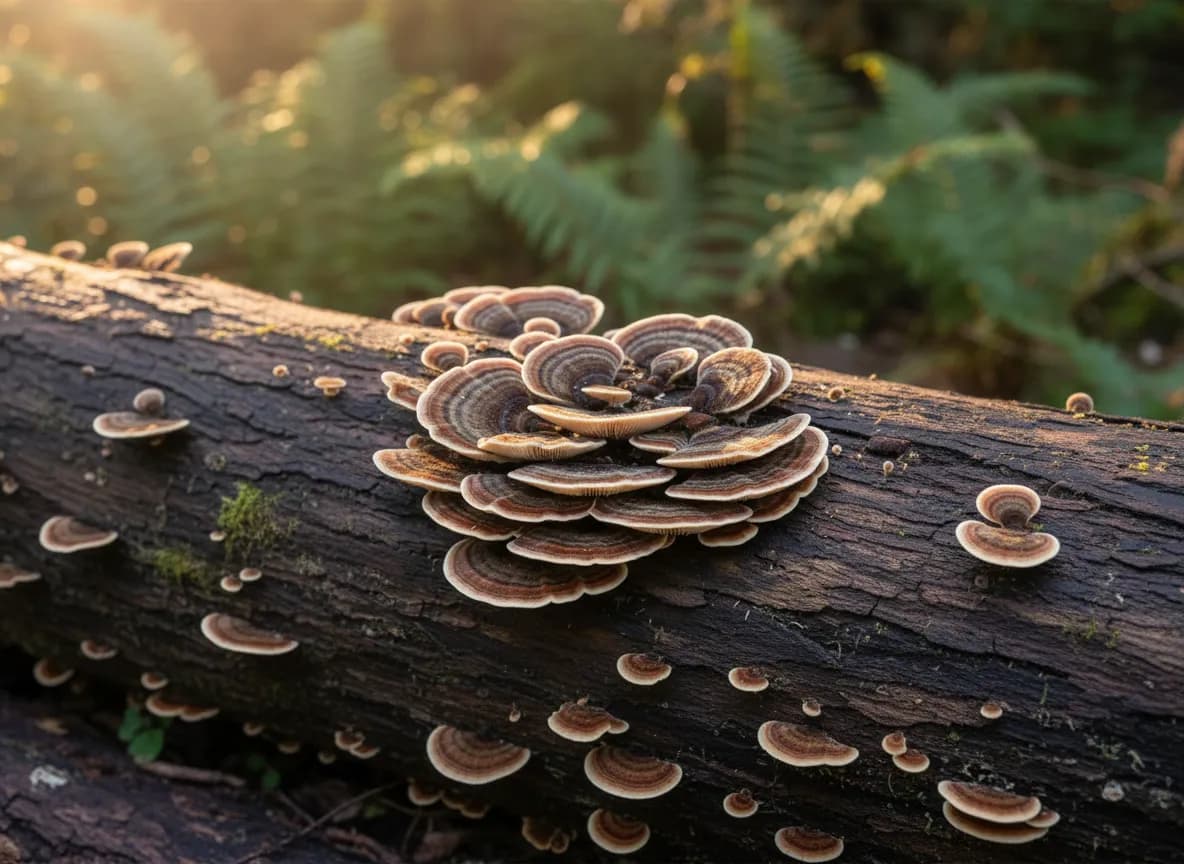
If you've ever walked through a Canadian forest in autumn, you've likely seen turkey tail mushrooms without knowing their name. Those colourful, fan-shaped brackets fanning out along fallen logs and stumps are Trametes versicolor — one of the most well-researched medicinal mushrooms in the world. While it may look humble, turkey tail has been the subject of hundreds of scientific studies, and its immune-supporting compounds have earned it a place in integrative health protocols across North America, Europe, and Asia.
What Is Turkey Tail Mushroom?
Turkey tail gets its common name from its concentric rings of brown, tan, blue, and cream that resemble a wild turkey's fanned tail feathers. It's one of the most common polypore mushrooms in the world, found on hardwood trees across every continent except Antarctica. In Canada, you'll spot it in forests from British Columbia to the Maritimes — it's especially abundant on birch, oak, and maple.
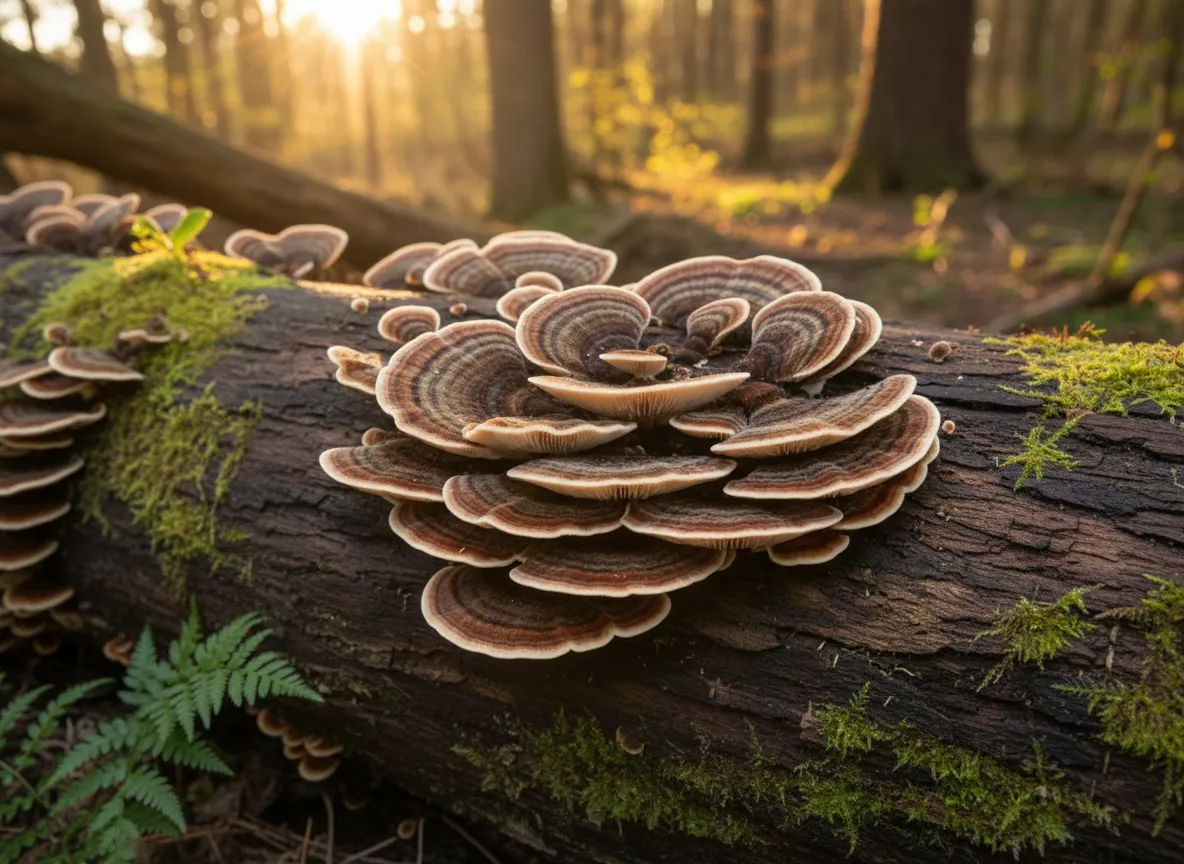
Unlike gourmet mushrooms such as oysters or shiitake, turkey tail is too tough and leathery to eat whole. Instead, its beneficial compounds are extracted into powders, tinctures, and capsules. This extraction process is important because many of turkey tail's active compounds are locked within chitin cell walls that the human digestive system struggles to break down on its own.
Turkey tail has a long history in traditional medicine. In Traditional Chinese Medicine (TCM), it has been used for centuries under the name Yun Zhi to support lung health and general vitality. In Japan, a turkey tail extract called PSK (polysaccharide-K) has been used alongside conventional treatments since the 1970s.
Key Compounds: PSK, PSP, and Beta-Glucans
What makes turkey tail so interesting to researchers? The answer lies primarily in three families of compounds.
PSK (Polysaccharide-K, also known as Krestin): PSK is a protein-bound polysaccharide first isolated from turkey tail in Japan in the 1960s. It has been one of the most studied mushroom-derived compounds in the world, with hundreds of published studies exploring its potential effects on immune function. In Japan, PSK has been approved as an adjunctive treatment and has been used in clinical settings for decades.
PSP (Polysaccharopeptide): Discovered in China in the 1980s, PSP is similar to PSK in structure. Research published in journals including Cancer Immunology and Immunotherapy suggests PSP may support immune cell activity, though more human clinical trials are needed to draw definitive conclusions.
Beta-Glucans: Like many medicinal mushrooms, turkey tail is rich in beta-glucans — complex polysaccharides that interact with receptors on immune cells. Beta-glucans are considered biological response modifiers, meaning they may help modulate immune system activity rather than simply stimulating it. This is a key distinction: turkey tail appears to support balanced immune function rather than pushing it in one direction.
What the Research Says About Immune Support
Turkey tail is arguably the most scientifically validated mushroom for immune support. Here's a summary of what the research suggests.
A 2012 NIH-funded study published in ISRN Oncology found that turkey tail extract may enhance immune function in immunocompromised individuals. The Phase I clinical trial demonstrated dose-dependent increases in natural killer cell activity, a key marker of immune function.
A systematic review published in Global Advances in Health and Medicine in 2014 examined multiple clinical trials involving turkey tail extracts and found consistent evidence suggesting immune-modulating effects, particularly when used as a complement to conventional approaches.
Research from Bastyr University showed that turkey tail polysaccharides may help maintain healthy immune cell counts. While these results are promising, researchers consistently note that larger, long-term human studies are needed.
It's important to approach these findings with appropriate caution. While the body of evidence is growing, turkey tail products are not approved to treat, cure, or prevent any disease in Canada. They are best understood as a potential complement to a healthy lifestyle.
Gut Health and Prebiotic Benefits
One of the more exciting areas of emerging turkey tail research involves its effects on gut health. The polysaccharides in turkey tail may act as prebiotics — compounds that feed beneficial bacteria in the gut microbiome.
A 2014 study published in Gut Microbes found that PSP from turkey tail had a prebiotic effect, promoting the growth of beneficial Bifidobacterium and Lactobacillus species while reducing populations of less desirable bacteria like Clostridium and Staphylococcus.
This is significant because the gut microbiome plays a central role in immune function — an estimated 70% of the immune system is located in the gut. By supporting a healthier microbial balance, turkey tail may provide an indirect pathway to better immune health.
Anecdotally, many of our customers report improved digestion after adding turkey tail to their daily routine. While individual experiences vary, the prebiotic research provides a plausible mechanism for these reports.
Antioxidant Properties
Turkey tail contains a diverse array of antioxidant compounds, including phenols, flavonoids, and various polysaccharides. A 2017 study published in the International Journal of Medicinal Mushrooms found that turkey tail extracts demonstrated significant free radical scavenging activity in laboratory settings.
These antioxidants may help protect cells from oxidative stress — a process linked to aging and various chronic health conditions. While the antioxidant capacity of any single food or product should not be overstated, turkey tail's diverse antioxidant profile adds another dimension to its potential health benefits.
How to Take Turkey Tail
Turkey tail is available in several formats, each with advantages depending on your preferences and lifestyle.
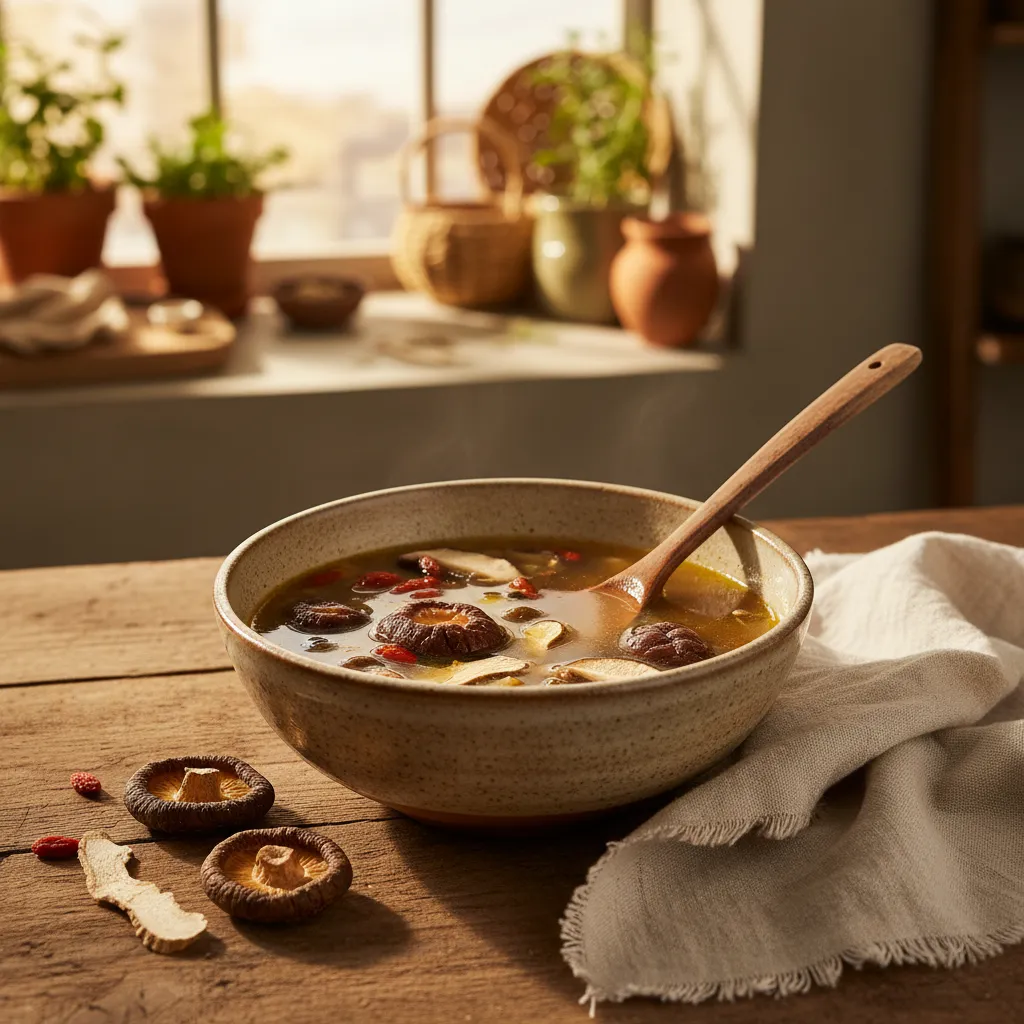
Powder: Turkey Tail Powder is our most versatile option. It's made from hot-water extracted turkey tail fruiting bodies, ensuring that the beneficial beta-glucans and polysaccharides are bioavailable. Add it to smoothies, coffee, tea, or soups. A typical serving is 1–2 grams per day. Because turkey tail has a mild, slightly earthy flavour, it blends well into most beverages without significantly changing the taste. For dedicated recipes, see our mushroom bone broth and umami mushroom popcorn guides — turkey tail's clean profile is the workhorse in both.
Tincture: Our Turkey Tail Tincture uses a dual-extraction process (hot water and alcohol) to capture both water-soluble compounds like beta-glucans and alcohol-soluble compounds like triterpenes. Tinctures are convenient for on-the-go use — just add a dropper to water or take it directly under the tongue for faster absorption.
Capsules: If you prefer a no-fuss approach, Turkey Tail Capsules deliver a consistent dose without any taste. They're ideal for people who travel frequently or prefer the simplicity of swallowing a capsule with their morning vitamins.
Mushroom Coffee: Our Turkey Tail Mushroom Coffee combines organic coffee with turkey tail extract, giving you immune support and your morning caffeine in a single cup. It's a great entry point if you're new to functional mushrooms. For a research-focused look at turkey tail alongside reishi and cordyceps in coffee, Coffee Studies covers the adaptogenic mushroom coffee category in depth.
Turkey tail can be taken at any time of day. Unlike some adaptogens that are best suited for morning or evening, turkey tail is gentle enough to take whenever it fits your routine. Many people take it in the morning with breakfast or as part of an afternoon tea ritual.
Growing Your Own Turkey Tail
For growers and hobbyists, turkey tail is one of the easier medicinal mushrooms to cultivate. Our Turkey Tail Mushroom Spawn can be used to inoculate hardwood logs or supplemented sawdust blocks. Turkey tail is aggressive and contamination-resistant, making it a forgiving species for beginners. It fruits in colourful overlapping shelves and can be dried and ground into powder for tea.
Who Should Consider Turkey Tail?
Turkey tail may be a good fit if you're looking for general immune support, particularly during cold and flu season. Its gentle, balancing nature makes it suitable for daily, long-term use. It's also worth exploring if you're interested in gut health or prebiotic support.
Turkey tail isn't just for humans — it's become one of the most popular functional mushroom supplements for dogs as well. Many dog owners add turkey tail powder to their pet's food for immune support. Read our complete guide on turkey tail for dogs for dosing, safety, and what the veterinary research says — and our turkey tail for dogs dosage chart for a printable weight-by-weight reference.
As with any new product, consult your healthcare provider before adding turkey tail to your routine — especially if you're pregnant, nursing, taking medications, or managing a health condition.
Explore More
Turkey tail is just one piece of the functional mushroom puzzle. If you're interested in cognitive support, read our guide to lion's mane mushroom benefits. Curious about combining multiple mushroom species? Learn about our 5 Mushroom Blend that includes turkey tail alongside reishi, lion's mane, chaga, and cordyceps.
Not sure whether powder or capsules are right for you? Our Mushroom Powder vs Capsules guide breaks down the pros and cons of each format.
All Nature Lion products are produced in our CFIA-licensed facility in Brantford, Ontario. We use Canadian-grown mushroom fruiting bodies — never mycelium on grain — and every batch is tested for potency, purity, and beta-glucan content. When you choose Nature Lion, you're supporting a small Canadian business committed to quality, transparency, and the remarkable potential of fungi.
Have a mushroom question? Dr. MycoThumb is our free AI mushroom expert — available 24/7 in the chat bubble at the bottom-right of every page.