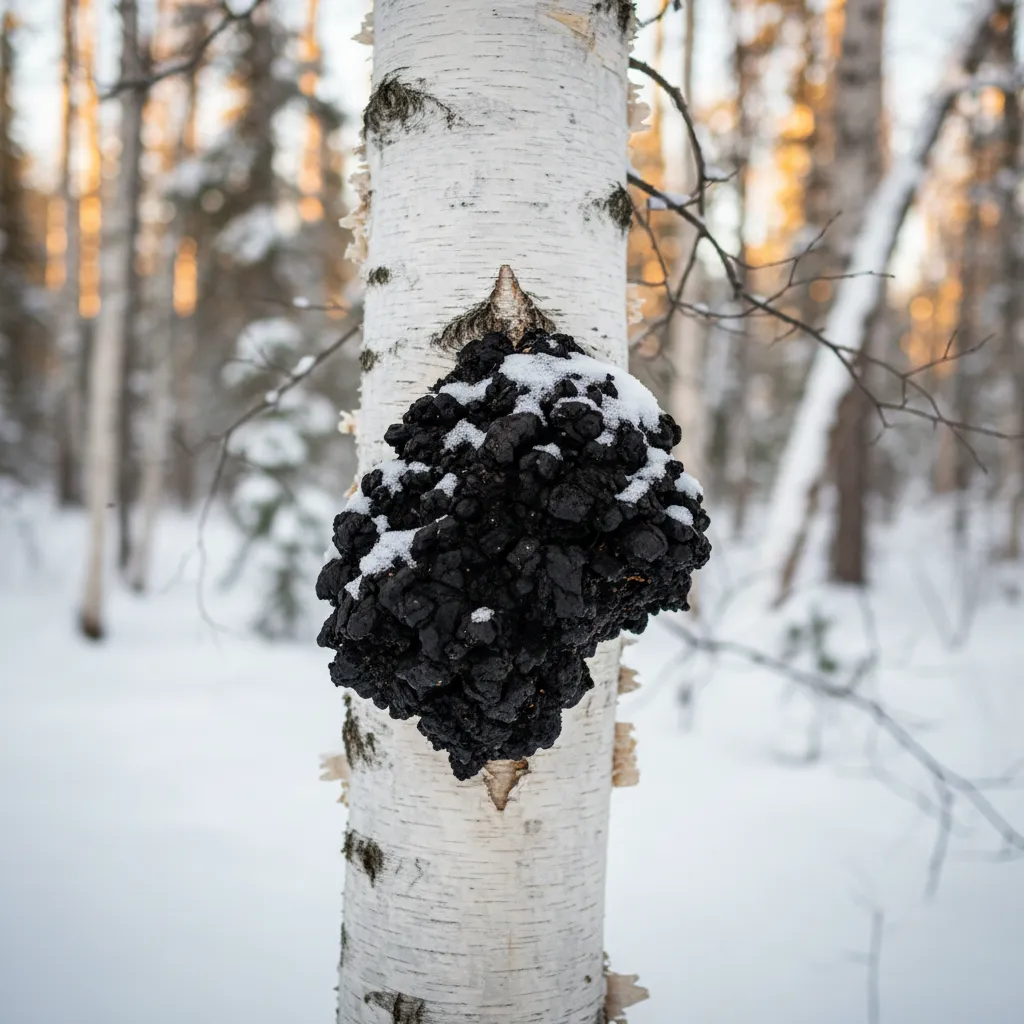
Deep in the boreal forests of Canada, a dark, charcoal-like growth clings to the trunk of a birch tree. It looks more like a chunk of burnt wood than anything you'd consider putting in your cup. But this unassuming organism — Inonotus obliquus, commonly known as chaga — has been used for centuries across Northern cultures and is now one of the most sought-after functional mushrooms in the world.
What Is Chaga?
Here's a fun fact that surprises most people: chaga isn't technically a mushroom. What we harvest and use is actually a sclerotium — a dense, hardened mass of mycelium and wood fibre that forms on the outside of living birch trees. The actual fruiting body of Inonotus obliquus (the spore-producing "mushroom" part) rarely appears until the host tree dies, and it looks nothing like the dark conk we know as chaga.
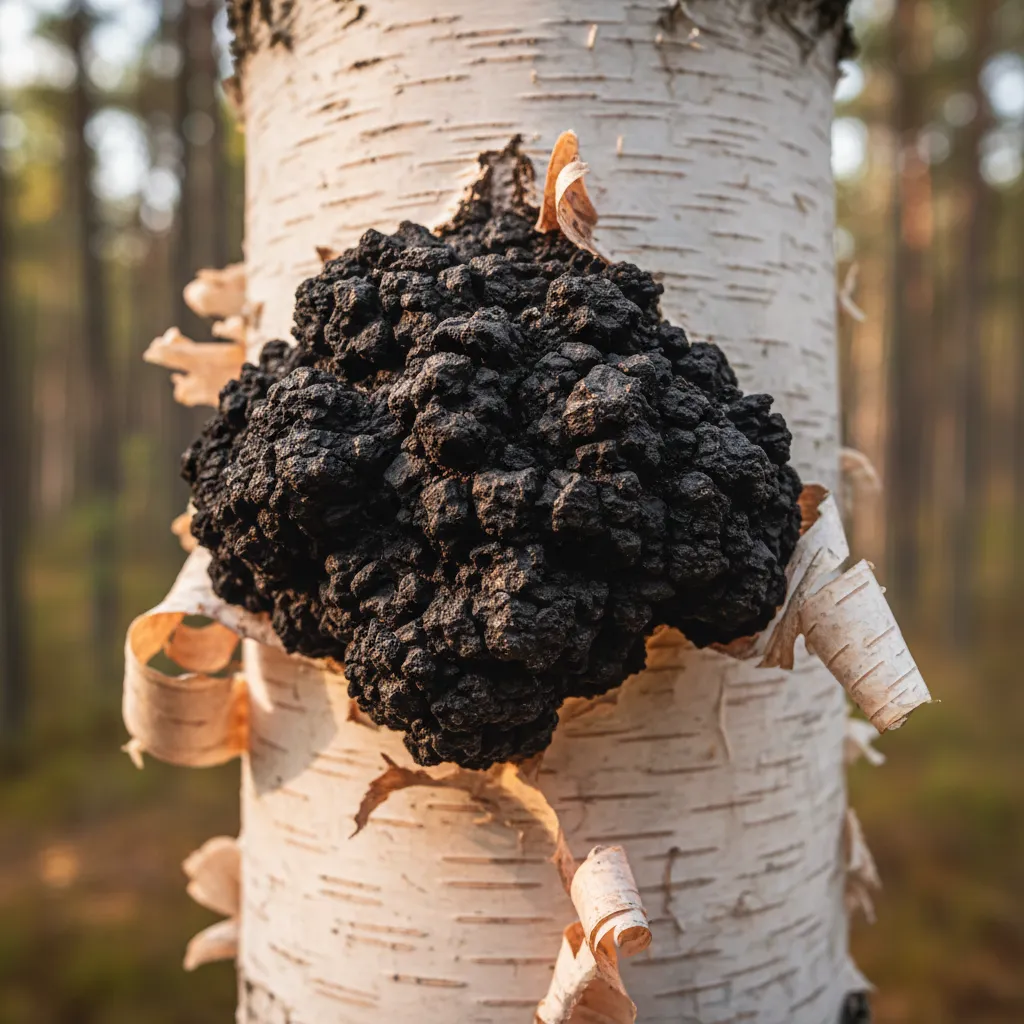
Chaga grows almost exclusively on birch trees in cold climates. It's found across Russia, Scandinavia, northern Europe, and — fortunately for us — throughout Canada's vast boreal forest. The sclerotium develops slowly over many years, drawing nutrients from both the birch tree and its own metabolic processes. This long growth period is believed to contribute to chaga's remarkably concentrated nutrient profile.
The exterior of chaga is black and cracked, coloured by massive concentrations of melanin. Cut it open, though, and you'll find a rich amber-orange interior. This interior is where most of the bioactive compounds reside.
A Canadian Wild-Harvesting Tradition
Canada has one of the world's largest reserves of wild chaga, and Indigenous peoples in northern regions have used it for generations. Across Siberia, chaga tea has been a staple folk remedy for centuries — the word "chaga" itself comes from the Russian adaptation of the Khanty word for the fungus.
In recent decades, chaga has exploded in popularity across North America. Canadian foragers harvest it from birch forests in Ontario, Quebec, Manitoba, and British Columbia. Wild-harvested chaga is prized for its potency, as it develops its full range of compounds through years of slow growth on living birch.
However, this popularity has raised important sustainability questions, which we'll address later in this article.
Antioxidant Research: The ORAC Score
Chaga has gained a reputation as an antioxidant powerhouse, and the numbers support the hype — at least in laboratory settings. Chaga has one of the highest ORAC (Oxygen Radical Absorbance Capacity) scores ever recorded for a natural substance. Its ORAC value far exceeds that of well-known antioxidant foods like blueberries, açai, and dark chocolate.
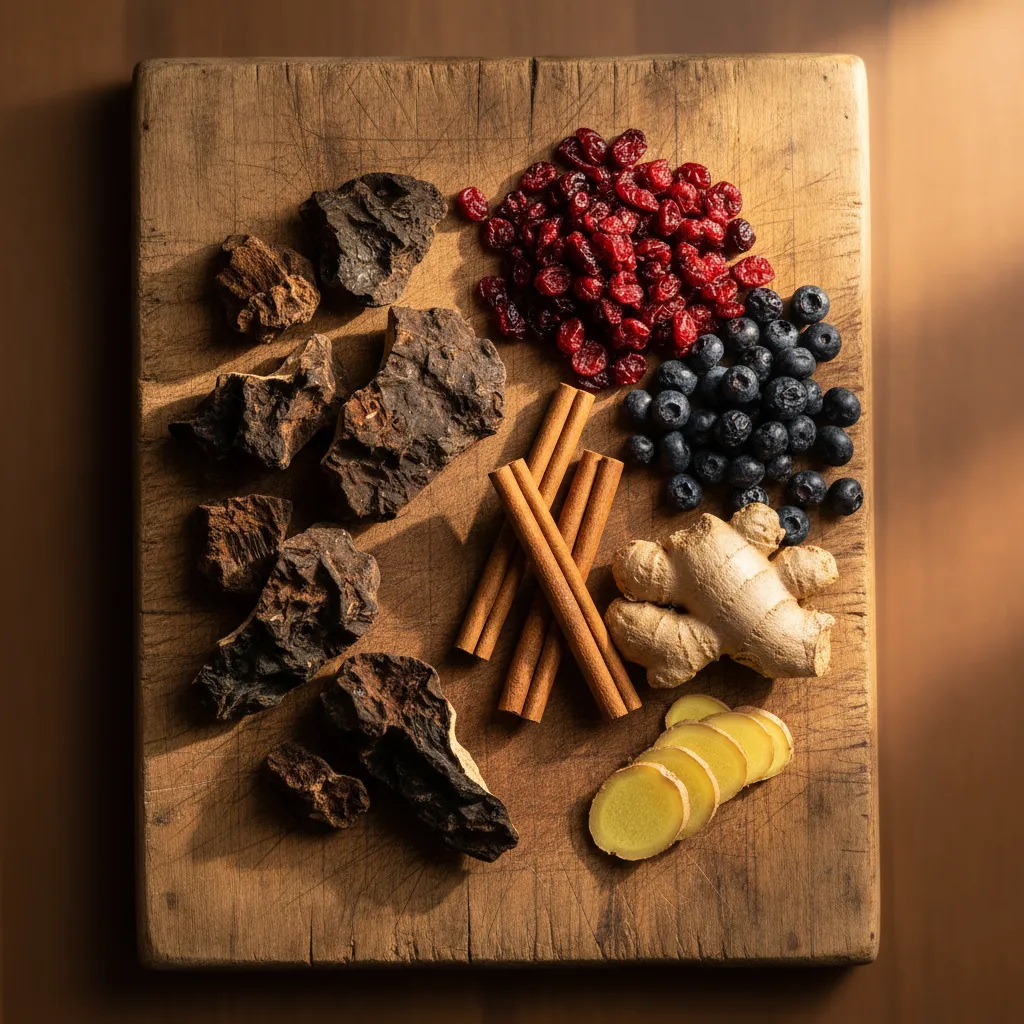
The key antioxidant compounds in chaga include:
- Melanin: The same pigment responsible for chaga's dark exterior is a potent free radical scavenger. Chaga melanin has been shown in laboratory studies to protect DNA from oxidative damage.
- Superoxide Dismutase (SOD): Chaga contains high levels of SOD, an enzyme that plays a critical role in protecting cells from reactive oxygen species.
- Polyphenols: A diverse array of phenolic compounds contribute to chaga's overall antioxidant capacity.
- Betulinic Acid and Betulin: These triterpenes, derived from the birch tree host, are unique to birch-grown chaga and have been the subject of considerable research.
It's worth noting that ORAC scores measured in a lab don't always translate directly to antioxidant effects in the human body. Bioavailability — whether these compounds are actually absorbed and active after consumption — matters significantly. Still, the breadth and concentration of antioxidant compounds in chaga is genuinely remarkable.
Immune Support
Like other medicinal mushrooms, chaga is rich in beta-glucans — complex polysaccharides that interact with immune cell receptors and may help modulate immune function. Research published in the Journal of Ethnopharmacology suggests that chaga polysaccharides may support the activity of macrophages and natural killer cells, two key players in the innate immune system.
A 2011 study in Mycobiology found that chaga extracts demonstrated immunomodulatory effects in cell culture, supporting the production of certain cytokines involved in immune signalling. While most of this research has been conducted in laboratory and animal models rather than large-scale human clinical trials, the consistency of results across studies is encouraging.
Chaga's combination of immune-modulating beta-glucans and potent antioxidants makes it a popular choice for people seeking comprehensive daily wellness support — particularly during the Canadian winter months when immune challenges are more common.
Skin Health
Chaga's high melanin content has led to growing interest in its potential benefits for skin health. Melanin is a powerful protector against UV radiation and oxidative damage — the two primary drivers of premature skin aging.
Some preliminary research suggests that chaga extracts may help protect skin cells from oxidative stress, though human clinical trials specifically focused on skin outcomes are still limited. The antioxidant compounds in chaga, particularly SOD and polyphenols, may also contribute to skin health by combating the free radical damage that accelerates aging.
Many of our customers incorporate chaga into their wellness routine with skin health as one of their goals. While we can't make specific claims about skin outcomes, the antioxidant profile of chaga provides a reasonable basis for this interest.
How to Use Chaga
Chaga has been consumed as a tea for centuries, and this remains one of the most traditional and enjoyable ways to take it.

Chaga Tea: If you're using raw chaga chunks, simmer them in water for at least 30 minutes (and up to several hours) at a temperature below boiling. The longer the simmer, the more compounds are extracted. The resulting brew has a smooth, slightly vanilla-like flavour with earthy undertones — it's genuinely pleasant to drink. You can reuse chunks multiple times until the liquid no longer darkens.
Powder: Our Chaga Powder is made from hot-water extracted chaga, which means the beneficial beta-glucans and polysaccharides are already liberated from the chitin cell walls. This is a crucial distinction — simply grinding raw chaga into powder without extraction makes many of its key compounds unavailable for absorption. Add 1–2 grams to hot water for an instant chaga tea, or blend into smoothies, coffee, or oatmeal.
Tincture: The Chaga Tincture uses a dual-extraction method to capture both water-soluble beta-glucans and alcohol-soluble triterpenes like betulinic acid. This is arguably the most comprehensive way to access chaga's full spectrum of bioactive compounds. Take it directly under the tongue or add it to any beverage.
Mushroom Coffee: Our Chaga Mushroom Coffee blends organic coffee with chaga extract for an antioxidant-rich morning ritual. The smooth, slightly chocolatey notes of chaga complement coffee surprisingly well. For per-cup ratios using chaga powder instead, see our mushroom coffee recipe and mushroom hot chocolate guides — chaga's natural cocoa-adjacent depth makes it our top pick for both. Coffee Studies has a detailed primer on chaga coffee — how it's brewed, what it tastes like, and where the research stands.
Chaga can be taken at any time of day. Many people prefer it in the morning as a warm, grounding beverage to start the day.
Sustainability Concerns: Wild vs Cultivated
This is an important topic that we believe every responsible chaga company should address openly.
Wild chaga grows slowly — a single conk may take 10 to 20 years to reach harvestable size. As demand has surged, overharvesting has become a genuine concern in some regions. Irresponsible harvesting practices — taking the entire conk, harvesting from young or stressed trees, or returning to the same sites too frequently — can deplete local populations and harm the birch trees that chaga depends on.
Sustainable wild-harvesting guidelines include leaving at least 30% of the conk on the tree, never harvesting from small or unhealthy trees, rotating harvest areas, and avoiding chaga on dead trees (the compound profile changes significantly once the host dies).
Cultivated chaga is an emerging alternative, though lab-grown chaga may have a different compound profile — particularly lower levels of betulinic acid and melanin, which develop through the birch tree relationship and years of slow growth.
At Nature Lion, we believe in transparency about sourcing. Our chaga products are clearly labelled so you know exactly what you're getting. We prioritize sustainable sourcing practices and encourage all chaga consumers to ask questions about where their chaga comes from.
Who Should Consider Chaga?
Chaga may be a good fit if you're looking for antioxidant support, gentle immune modulation, or a warm daily tonic with centuries of traditional use behind it. It's particularly popular among Canadians who feel a connection to this distinctly northern organism.
As always, consult your healthcare provider before starting any new product — especially if you take blood-thinning medications, as some chaga compounds may interact with anticoagulants.
Explore More
Want to learn about other functional mushrooms? Check out our guides to lion's mane mushroom benefits and turkey tail mushroom benefits. If you're curious about mushroom coffee, our complete mushroom coffee guide covers everything you need to know.
All Nature Lion products are made in our CFIA-licensed facility in Brantford, Ontario. We're committed to quality, transparency, and sustainability — because the forest deserves as much respect as the fungi that grow in it.
Have a mushroom question? Dr. MycoThumb is our free AI mushroom expert — available 24/7 in the chat bubble at the bottom-right of every page.