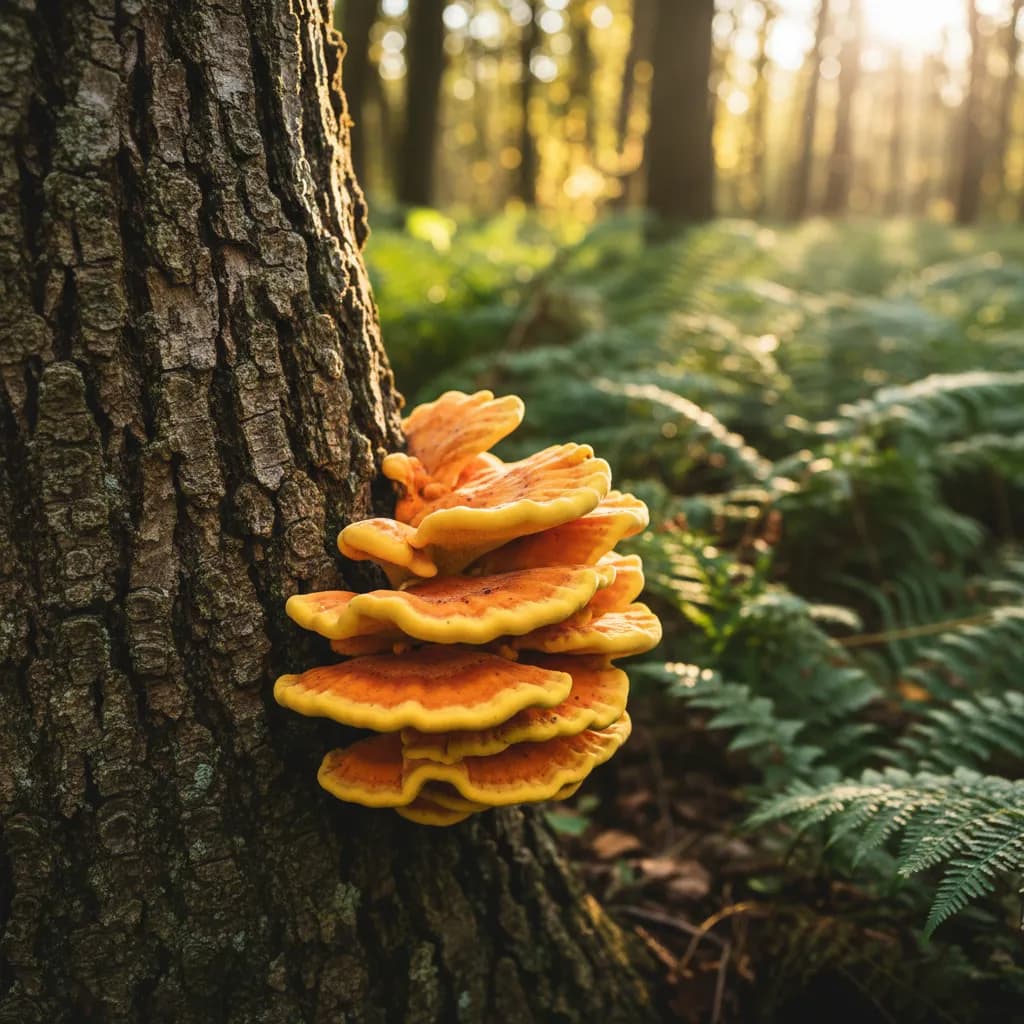
Few wild mushrooms stop you in your tracks the way chicken of the woods does. A mature specimen is impossible to miss — massive shelves of brilliant orange and sulphur yellow fanning out from the trunk of an oak or maple, sometimes stretching a metre or more across. It looks like something from a fantasy film, and then you learn that it tastes remarkably like chicken. Not "sort of like chicken if you squint." Actually, genuinely like chicken.
Chicken of the woods is one of the most popular foraging targets in North America, and it's abundant across eastern Canada from June through October. But before you start slicing into that neon shelf you spotted on your hike, there are important things to know about species identification, host tree safety, and preparation. This guide covers all of it.
What Is Chicken of the Woods?
Chicken of the woods is a common name for several species in the genus Laetiporus. These are polypore mushrooms — they have pores on their underside instead of gills — that grow as bracket or shelf fungi on living and dead trees. The mushroom is parasitic, causing a brown rot that breaks down the heartwood of its host tree.
Globally, there are roughly 17 recognized Laetiporus species. In eastern Canada, you're most likely to encounter three:
Laetiporus sulphureus
The classic chicken of the woods. Grows on hardwood trees — predominantly oak, but also maple, cherry, beech, and willow. Bright orange upper surface with a sulphur-yellow pore surface and margin. This is the species most Canadians are referring to when they say "chicken of the woods," and it's the one with the longest history of safe consumption.
Laetiporus cincinnatus
Very similar in appearance to L. sulphureus but often grows from the base of trees or from underground roots rather than directly on the trunk. The pore surface tends to be white to pale peach rather than bright yellow. Found on oak trees in southern Ontario. Considered by many foragers to have a slightly more tender texture than L. sulphureus.
Laetiporus huronensis
A species that grows specifically on conifers (hemlock, spruce, fir) in northeastern North America. This one is important to know about because chicken of the woods growing on coniferous trees should be treated with extra caution — reactions and digestive upset are reported more frequently with conifer-hosted specimens. More on this below.
Identification
Chicken of the woods is considered one of the safer wild mushrooms to identify because it has very few look-alikes. That said, accurate identification still requires attention to detail.
Key Identification Features
Growth form: Large, overlapping shelves (brackets) growing directly from tree trunks, branches, or stumps. Individual shelves can be 5-30 cm across. A single cluster can weigh several kilograms.
Upper surface: Bright orange to orange-red, sometimes fading to peach or pale orange at maturity. The surface is suede-like to smooth, with subtle concentric zones of colour.
Pore surface (underside): Bright sulphur yellow when young and fresh. The pores are tiny — you may need a hand lens to see individual pores. The yellow pore surface is one of the most distinctive identification features.
Margin (edge): The actively growing edge is thick, rounded, and bright yellow to yellow-orange. As the mushroom ages, the margin becomes thinner and paler.
Flesh: White to pale yellow, firm, and succulent when young. The flesh darkens and becomes chalky, dry, and crumbly as the mushroom ages.
Spore print: White.
Habitat: On hardwood trees (for L. sulphureus). Most commonly oak in eastern Canada, but also maple, cherry, and other hardwoods. Less commonly on conifers (different species — see above).
What Could You Confuse It With?
Very little, honestly. The combination of bright orange colour, bracket growth form, sulphur-yellow pore surface, and tree habitat is unique. The most commonly cited "look-alike" is:
Jack O'Lantern (Omphalotus olearius) — Orange mushroom that grows in clusters at the base of trees. But Jack O'Lanterns have true gills (not pores), grow from the ground rather than as shelf fungi from trunks, and have a completely different growth form. Anyone who examines both side by side would never confuse them.
Some beginners worry about confusing chicken of the woods with shelf-forming polypores like Phaeolus schweinitzii (dye polypore) or other brown bracket fungi. But none of these share the vibrant orange-and-yellow colour scheme that makes chicken of the woods so distinctive.
Safety Considerations
Chicken of the woods is widely considered a choice edible mushroom, but there are important caveats that don't always make it into the social media posts.
The 10% Reaction Rate
Approximately 10% of people who eat chicken of the woods experience some degree of gastrointestinal distress — nausea, stomach cramps, or general digestive discomfort. This is a well-documented phenomenon in mycological literature, and the exact cause isn't fully understood.
What you can do:
- The first time you eat chicken of the woods, eat a small amount (a few bites) and wait 24 hours before eating more.
- Always cook it thoroughly (more on this below).
- Eat only young, tender specimens — older, tougher ones are harder to digest.
Host Tree Matters
This is critical and under-discussed. Chicken of the woods absorbs compounds from its host tree, and some host trees produce toxins or irritants that can make it into the mushroom.
Safe hosts: Oak, maple, cherry, beech, and most deciduous hardwoods. These are the trees with the longest track record of safe chicken of the woods consumption.
Caution hosts: Eucalyptus (not native to Canada but present in some urban plantings), coniferous trees (hemlock, spruce, pine, fir), and yew. Chicken of the woods on conifers (L. huronensis and related species) has a higher reported rate of adverse reactions. Some experienced foragers eat conifer-hosted chicken of the woods without issue, but it carries more risk.
Avoid: Chicken of the woods on yew (Taxus) trees. Yew is toxic, and compounds from the wood can be present in the mushroom.
The bottom line: Stick to chicken of the woods on oak and other common hardwoods, especially if you're new to foraging.
Always Cook It Thoroughly
Chicken of the woods should never be eaten raw. Raw consumption can cause significant gastrointestinal distress even in people who tolerate the cooked mushroom perfectly. A minimum of 15 minutes of cooking at proper temperature is recommended. Longer is fine — this isn't a mushroom that gets overcooked easily.
Alcohol Interaction
Some foragers report that consuming alcohol with chicken of the woods increases the likelihood of digestive upset. This isn't conclusively proven, but it's mentioned frequently enough in foraging communities that it's worth noting. If you're eating chicken of the woods for the first time, consider skipping the wine with dinner.
Foraging Calendar
In Ontario and eastern Canada, chicken of the woods season runs from approximately June through October, with peak availability in July through September.
| Month | Status | Notes |
|---|---|---|
| June | Early season | First specimens appear, usually on oak in warmer southern areas |
| July | Peak | Prime season. Young, tender specimens are abundant |
| August | Peak | Continued strong availability |
| September | Late peak | Still abundant, particularly after rain |
| October | Declining | Older specimens, some fresh growth possible |
| November | End of season | Occasional finds in mild years |
Temperature and rainfall significantly affect timing. Warm, wet summers produce the best chicken of the woods years. A dry summer delays and reduces fruiting.
For a comprehensive Ontario foraging guide covering all seasons and species, read our mushroom foraging in Ontario guide.
Harvesting
When to Harvest
Young specimens are dramatically better than old ones. Here's how to tell the difference:
Harvest (young and tender):
- Bright, vivid orange and yellow colour
- Flesh is moist and succulent — it should feel like raw chicken breast when you press it
- The edges are thick, rounded, and actively growing
- The pore surface is bright yellow and slightly damp
Leave (old and tough):
- Colours have faded to pale orange, peach, or whitish
- Flesh is dry, chalky, or crumbly
- The edges are thin, brittle, or curling
- The pore surface is dull or dried out
- Any signs of insect damage (tiny holes throughout the flesh)
How to Harvest
Use a sharp knife like an Opinel No. 8 to cut the shelves away from the tree. Cut at the base where the shelf meets the trunk. You don't need to take the entire cluster — leave some of the inner, older shelves and take the young outer growth.
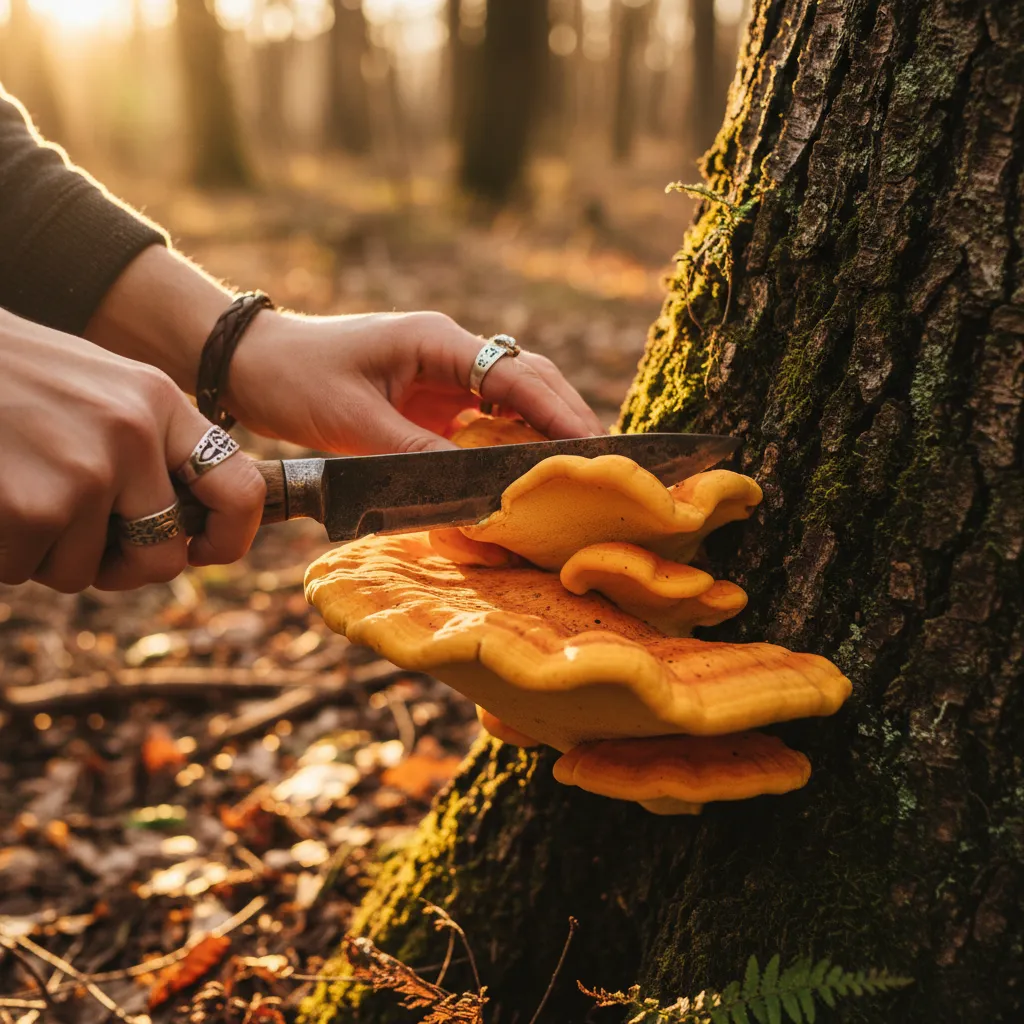
Only take what you'll use. A large chicken of the woods cluster can weigh 5-10 kg, and unless you're planning to preserve the excess, that's far more than most households can eat before it loses quality.
Post-Harvest Handling
Get your harvest into a mesh bag or basket -- never a sealed plastic bag, which traps moisture and accelerates spoilage. Refrigerate within a few hours of harvesting. Fresh chicken of the woods keeps in the fridge for 5-7 days.
Opinel No. 8 Folding Knife
A clean cut at the base preserves the mushroom and the mycelium. The Opinel's carbon steel blade is razor-sharp, lightweight, and locks safely in your pocket between finds.
View on Amazon.ca →When you buy through our links, it supports our mycology research at no extra cost to you.
Cooking Chicken of the Woods
Remember: minimum 15 minutes of cooking. Never eat it raw or undercooked.
Basic Preparation
- Brush off any debris or bark fragments.
- Slice into pieces about 1 cm thick. Discard any sections that are tough, dry, or discoloured.
- If the mushroom is particularly large or thick, consider slicing the outer tender portions and composting the tougher inner parts.
- Some foragers soak sliced chicken of the woods in salted water for 30 minutes before cooking to remove any insects and improve texture. This is optional but a good practice for wild-harvested specimens.
Recipe 1: Classic Pan-Fried "Chicken" Strips
The preparation that gives this mushroom its name.
Ingredients:
- 400 g chicken of the woods, sliced into strips
- 2 tablespoons butter or oil
- 2 cloves garlic, minced
- Salt, pepper, and paprika to taste
- Squeeze of lemon
Method:
- Heat butter in a large skillet over medium-high heat.
- Add mushroom strips in a single layer. Don't crowd the pan — work in batches if needed.
- Cook for 5-6 minutes per side until golden brown and cooked through.
- Add garlic during the last 2 minutes.
- Season with salt, pepper, paprika, and lemon.
- Total cooking time: at least 15 minutes.
The texture when properly cooked is remarkably similar to chicken breast — firm, slightly fibrous, and satisfying. The flavour is mild and savoury with a subtle sweetness.
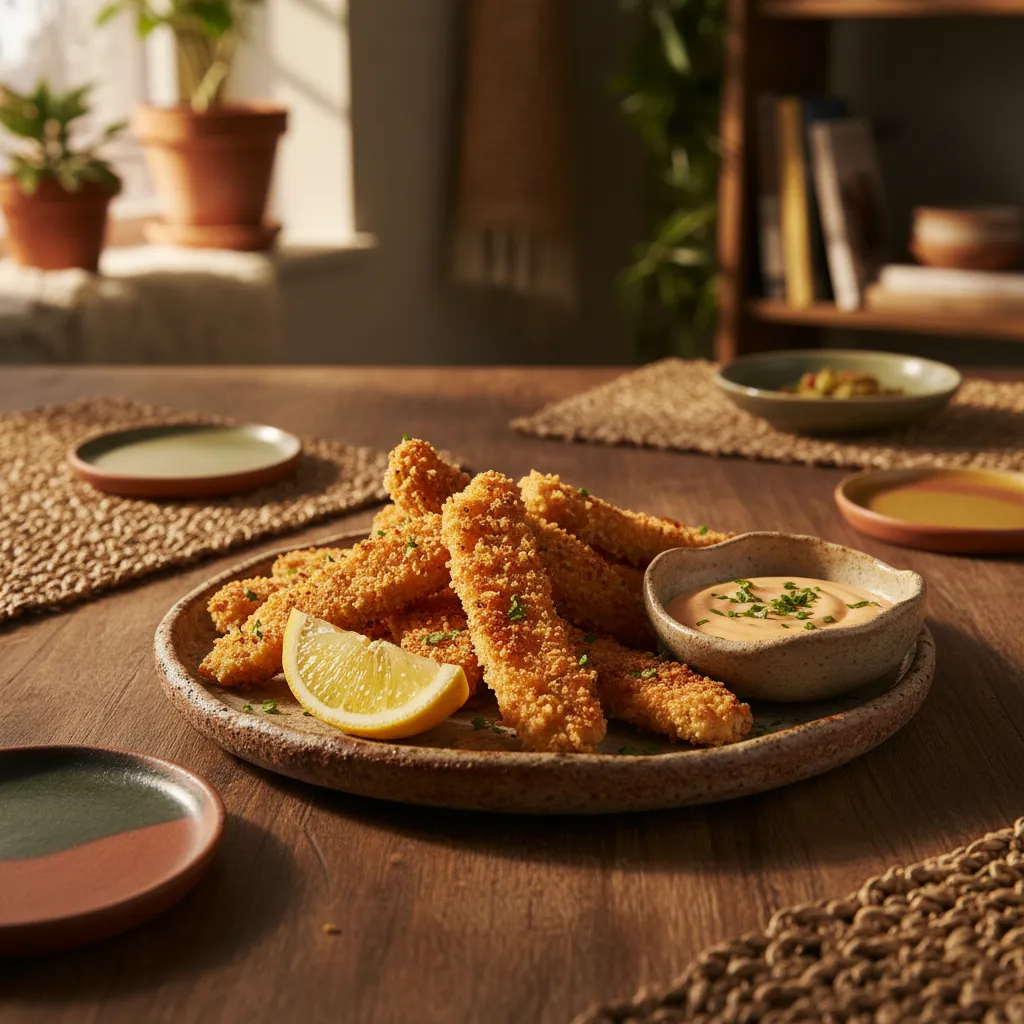
Recipe 2: Breaded "Chicken" Nuggets
A family favourite, especially with kids.
Ingredients:
- 400 g chicken of the woods, cut into nugget-sized pieces
- 1 cup flour
- 2 eggs, beaten
- 1 cup panko breadcrumbs
- Salt, garlic powder, and smoked paprika
- Oil for frying
Method:
- Season flour with salt, garlic powder, and paprika.
- Dredge mushroom pieces in seasoned flour, dip in egg, then coat in panko.
- Fry in 2-3 cm of oil at 180°C (350°F) for 4-5 minutes per side until golden and crispy.
- Drain on paper towels. Serve with your favourite dipping sauce.
These are genuinely difficult to distinguish from actual chicken nuggets in a blind taste test. The texture is that close.
Recipe 3: Chicken of the Woods Curry
A hearty preparation that makes the most of larger quantities.
Ingredients:
- 500 g chicken of the woods, cubed
- 1 onion, diced
- 3 cloves garlic, minced
- 1 can coconut milk
- 2 tablespoons curry paste (red or yellow)
- 1 tablespoon oil
- Fresh cilantro and lime for garnish
- Cooked rice for serving
Method:
- Saute onion in oil until soft (5 minutes).
- Add curry paste and garlic, cook 1 minute.
- Add mushroom cubes and cook for 5 minutes, stirring.
- Add coconut milk, bring to a simmer, and cook for 15-20 minutes until mushroom is tender and sauce has thickened.
- Serve over rice with cilantro and lime.
Preservation
If you've found a large cluster and can't eat it all fresh, here are your preservation options.
Freezing (Best Method)
Cook the mushroom first (saute, fry, or simmer), then cool and freeze in portioned bags. Cooked chicken of the woods freezes well and maintains good texture for 6-12 months. Do not freeze raw — the texture degrades significantly.
Dehydrating
Slice thin (3-5 mm) and dehydrate at 55°C (130°F) for 6-8 hours until completely dry and brittle. Store in airtight containers. Rehydrated chicken of the woods works well in soups, stews, and curries, though the texture won't be quite as firm as fresh.
Pickling
Quick pickle sliced chicken of the woods in a mixture of vinegar, water, sugar, and spices. Refrigerator pickled chicken of the woods keeps for 2-3 weeks and makes an excellent appetizer or salad topping.
Nutritional Profile
Chicken of the woods is nutritionally impressive for a wild food:
- Protein: Approximately 14 g per 100 g (dried weight) — high for a mushroom
- Fat: Very low (less than 1 g per 100 g fresh)
- Calories: Approximately 30-35 per 100 g fresh
- Fibre: Good source of dietary fibre
- Potassium: Significant amounts
- Vitamins: Contains B vitamins, particularly niacin and riboflavin
The protein content is notable — chicken of the woods has one of the highest protein percentages among commonly foraged mushrooms, which partly explains why the texture is so meat-like.
Ecological Role
Chicken of the woods is a saprotrophic and parasitic fungus that plays an important role in forest ecosystems. By breaking down the heartwood of trees (causing a "brown rot"), it accelerates the nutrient cycling process and creates habitat for insects, birds, and other organisms that depend on decaying wood.
The mycelium of Laetiporus can persist in a tree for years or even decades, producing annual fruiting bodies each summer and fall. If you find a chicken of the woods on a tree, make a note of the location — there's a good chance it'll fruit in the same spot next year.
Finding chicken of the woods is a highlight of any foraging season. If it inspires you to learn more about wild mushrooms in your area, our mushroom foraging in Ontario guide covers the full seasonal calendar, best locations, and safety practices.
Can't Find One? Grow Your Own Gourmets
Chicken of the woods isn't sold commercially and can't be grown at home — but several wild-flavoured gourmet species can, and they're available right now from our Canadian grow facility:
- Lion's Mane Grow Kit — meaty, seafood-like texture (often compared to crab or lobster meat). Closest cultivated analogue to chicken of the woods' rich, savoury bite.
- King Oyster Grow Kit — thick stems with a firm, almost scallop-like texture when seared. Excellent meat substitute.
- Blue Oyster Grow Kit — fast-fruiting, beginner-friendly, prolific yields. Great first kit if you've never grown before.
- Browse all mushroom grow kits — shipped fresh across Canada with free shipping, ready to fruit on your countertop in 1-2 weeks.
For experienced growers ready to scale, our grain spawn and liquid cultures let you inoculate your own substrate for full-control cultivation.
Chicken of the woods is one of those wild foods that lives up to the hype. The flavour, the texture, the sheer visual spectacle of finding a massive orange shelf bursting from an oak trunk on a summer hike — it's the mushroom that hooks new foragers for life. Just remember the rules: stick to hardwood hosts, cook it thoroughly, try a small amount your first time, and harvest only what you'll use.
Want to grow this species? Dr. MycoThumb is our free AI growing assistant — ask about growing conditions, substrate recipes, troubleshooting, and more. Available 24/7 in the chat bubble at the bottom-right of every page.