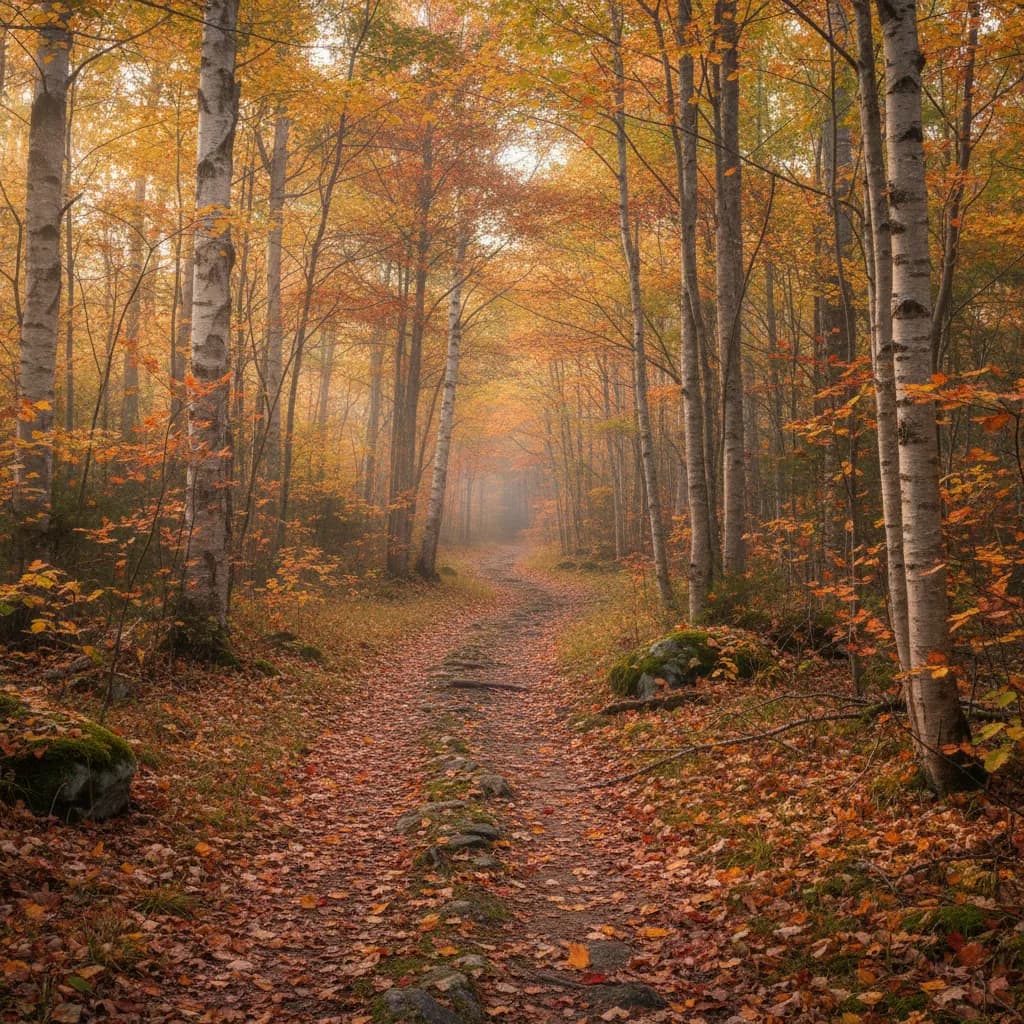
Ontario is one of the best places in North America to forage for wild mushrooms. The province's vast forests — from the boreal shield stretching north of Sudbury to the Carolinian hardwoods in the southwest — support an incredible diversity of fungal species. Whether you're picking chanterelles in a Haliburton maple stand or harvesting chaga from birch trees on crown land near Algonquin, Ontario offers something for every season and every skill level.
But foraging in Ontario also comes with rules, risks, and responsibilities that every mushroom hunter needs to understand before heading into the bush. This guide covers everything from legal framework to species identification, seasonal timing, and essential gear.
Ontario Foraging Calendar
What's fruiting in Ontario — tap a month to see the species.
August in Ontario
8 species fruiting
Black Trumpet
Craterellus cornucopioides
★ Peak season right now
Hard to spot — looks like a dark hole in the leaf litter. Beech-maple forests in central Ontario hold the densest patches.
Learn to identify on Dr. MycoTek →Chicken of the Woods
Laetiporus sulphureus
★ Peak season right now
Bright orange shelves on hardwoods (oak, cherry, maple). Young, soft edges only — older specimens turn woody and can upset stomachs.
Learn to identify on Dr. MycoTek →Giant Puffball
Calvatia gigantea
Soccer-ball-sized white spheres in pastures and field edges. Must be pure white inside — yellow or brown means it's past edible.
Learn to identify on Dr. MycoTek →Golden Chanterelle
Cantharellus cibarius
★ Peak season right now
Look on mossy slopes in mixed hardwood-conifer forests, especially the Muskokas, Haliburton and Algoma. False gills (ridges that fork) + apricot scent = unmistakable.
Learn to identify on Dr. MycoTek →King Bolete (Porcini)
Boletus edulis
★ Peak season right now
Pine and spruce forests across northern Ontario. Spongy pores under the cap, never gills. Confirm against bitter bolete lookalikes.
Learn to identify on Dr. MycoTek →Lion's Mane
Hericium erinaceus
White waterfall-shaped fruit on living or dead hardwoods (especially beech and maple). One of the easiest species to identify with zero deadly lookalikes.
Learn to identify on Dr. MycoTek →Lobster Mushroom
Hypomyces lactifluorum
★ Peak season right now
A parasitic fungus that colonises Russula and Lactarius hosts, turning them bright orange-red with firm seafood-like flesh.
Learn to identify on Dr. MycoTek →Wild Oyster Mushroom
Pleurotus ostreatus
★ Peak season right now
Fruits year-round on fallen hardwoods — poplar, birch, maple. Cool fall flushes produce the best texture.
Learn to identify on Dr. MycoTek →Year at a glance
The Legal Framework: Where You Can and Can't Forage
This is where most Ontario foraging guides fall short, so we're going to be thorough.
Crown Land
Ontario has roughly 87% of its land mass designated as crown land, and this is where most legal foraging happens. Under Ontario's Crown Land Use Policy, the general public has the right to harvest non-timber forest products — including mushrooms — from unoccupied crown land for personal use.
Key rules:
- Personal use only. Commercial harvesting requires permits from the Ministry of Natural Resources and Forestry (MNRF).
- No motorized access restrictions. You can drive to crown land on existing roads, but you can't create new trails or damage the land to access foraging sites.
- Leave no trace. Pack out everything you bring in. Respect the forest.
- Check for land use permits. Some crown land parcels are under active forestry licences, mining claims, or other permits. The Ontario Crown Land Use Atlas (available online) is the best resource for checking what's allowed on a specific parcel.
The best crown land foraging areas in Ontario are in the Canadian Shield region — roughly from Parry Sound north through Muskoka, Haliburton, Bancroft, and up to Sudbury, Timmins, and beyond. The mix of coniferous and hardwood forests creates diverse habitat for dozens of edible species.
Provincial Parks
Ontario's provincial parks — including Algonquin, Killarney, Quetico, and the rest — generally prohibit the collection of any natural objects, including mushrooms, plants, rocks, and animals. This is governed by the Provincial Parks and Conservation Reserves Act.
There are occasional exceptions for specific parks or specific activities (some parks allow berry picking, for example), but the default position is no foraging. Always check with the specific park office before collecting anything.
National Parks
Same story. Parks Canada prohibits the removal of natural resources from national parks, including Bruce Peninsula, Georgian Bay Islands, Point Pelee, Pukaskwa, and Rouge National Urban Park. Don't forage in national parks.
Private Land
You need explicit permission from the landowner. Period. Foraging on private land without permission is trespassing under Ontario law. If you find a great foraging spot on private land, ask the owner — many rural landowners are happy to grant access, especially if you share some of your harvest.
First Nations Land
First Nations reserves and traditional territories have their own rules and governance regarding natural resource harvesting. Never forage on reserve land without permission from the band council. More broadly, many of the best foraging areas in Ontario overlap with unceded or treaty territory, and responsible foragers should be aware of and respect Indigenous rights and relationships with the land.
Species by Season
Ontario's foraging season runs roughly from late April through November, with different species appearing at different times. Here's your seasonal calendar.
Spring (April - June)
Morels (Morchella species) — The crown jewel of Ontario spring foraging. Morels appear from late April through early June, typically 1-2 weeks after the last frost. Look for them in disturbed areas — old orchards, burn sites, flood plains, and around dying elm trees. The Ottawa Valley, Prince Edward County, and areas around Simcoe County are well-known morel grounds. Morels have a distinctive honeycomb cap and hollow interior. Always cook morels thoroughly — they contain hydrazine compounds that are destroyed by heat but can cause illness if eaten raw.
Dryad's Saddle (Cerioporus squamosus) — Also called pheasant back, this large polypore appears on hardwood stumps and logs in May and June. Young specimens are tender with a cucumber-like aroma. Older ones become tough and woody. Common throughout southern and central Ontario.
Oyster Mushrooms (Pleurotus species) — Wild oysters fruit on dead hardwood throughout the spring. Look for clusters on fallen trees and stumps, particularly poplar, birch, and maple. If you enjoy wild oysters, you can grow them year-round at home with a grow kit or grain spawn. A Lion's Mane grow kit is another great way to enjoy gourmet mushrooms between foraging seasons.
Summer (June - August)
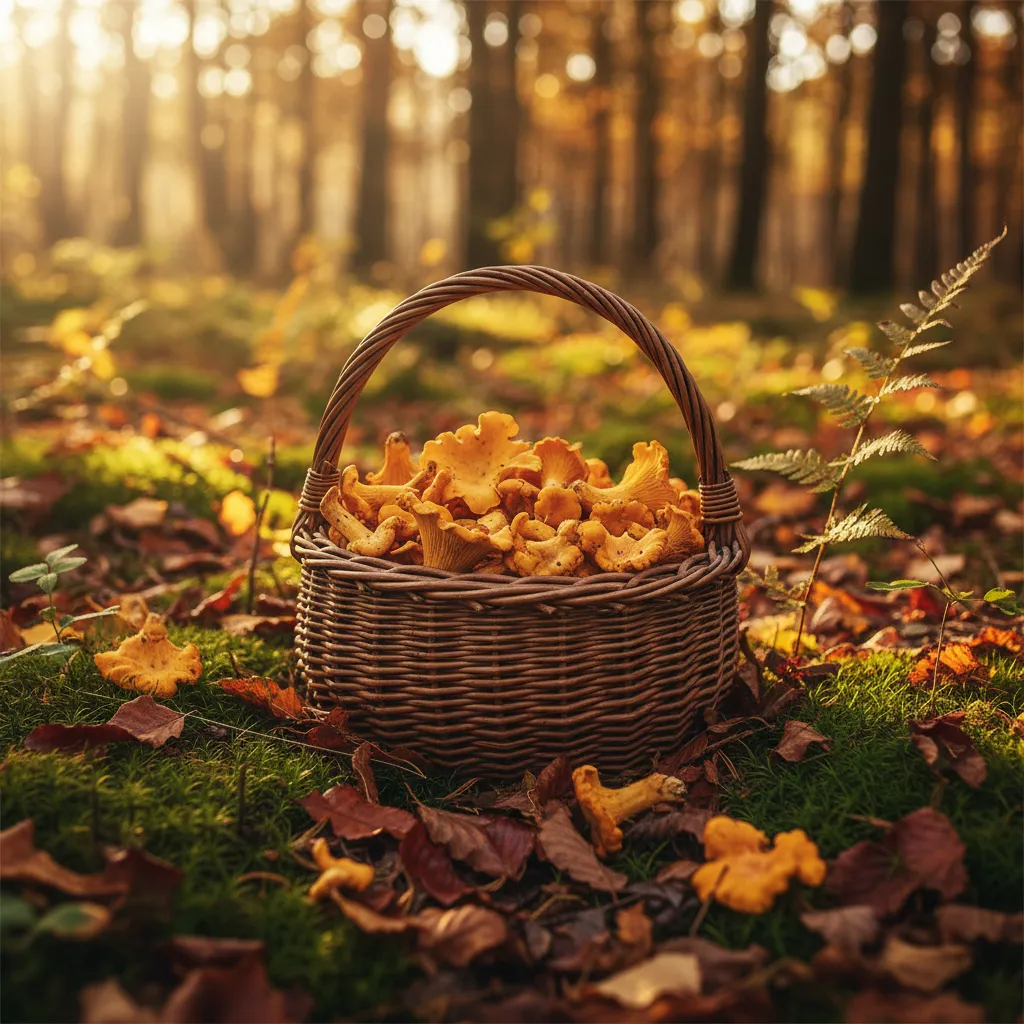
Chanterelles (Cantharellus cibarius) — Golden chanterelles are Ontario's most sought-after summer mushroom. They appear from late June through August in mixed hardwood-conifer forests, often near oak, birch, and hemlock. Look for them on mossy slopes and along forest trails in the Muskokas, Haliburton Highlands, and Algoma region. Chanterelles have false gills (shallow, forked ridges rather than true blade-like gills) and a fruity, apricot-like aroma that's unmistakable once you know it.
Black Trumpets (Craterellus cornucopioides) — The "poor man's truffle." These dark, funnel-shaped mushrooms are easy to miss on the forest floor but have an intense, complex flavour. Look in the same habitats as chanterelles, often in beech-maple forests. Central Ontario hardwood forests are prime territory.
Chicken of the Woods (Laetiporus species) — Bright orange and yellow shelf mushrooms that grow on hardwood trees from June through October. Young specimens are tender and taste remarkably like chicken when cooked properly. Read our complete chicken of the woods guide for detailed identification and cooking information.
Lobster Mushroom (Hypomyces lactifluorum) — Not technically a mushroom species but a parasitic fungus that colonizes Russula and Lactarius mushrooms, transforming them into bright orange-red, firm-fleshed delicacies with a seafood-like flavour. Found in mixed forests throughout central Ontario in July and August.
Fall (September - November)
Hen of the Woods / Maitake (Grifola frondosa) — Large, ruffled clusters that grow at the base of oak trees from September through November. A single specimen can weigh 5-20 kg. They return to the same trees year after year, so once you find a "honey hole," you're set for life. Southern Ontario oak forests are prime maitake territory.
Honey Mushrooms (Armillaria species) — Prolific fall mushrooms that grow in dense clusters on dead and dying trees. Common throughout Ontario from September through November. Always cook honey mushrooms thoroughly — they cause stomach upset when undercooked.
Puffballs (Calvatia gigantea) — Giant puffballs can reach the size of a soccer ball or larger. Found in meadows, pastures, and forest edges from August through October. Only eat them when the interior is pure white — any yellowing or greening means they're past prime.
Chaga (Inonotus obliquus) — While chaga can technically be harvested year-round, many foragers prefer fall and winter when the birch trees are dormant and the chaga is most visible (no leaves). Found on birch trees throughout northern Ontario. Learn more about this remarkable organism in our chaga mushroom benefits guide.
Year-Round
Turkey Tail (Trametes versicolor) — This colourful polypore grows on dead hardwood year-round. Too tough to eat fresh, but excellent dried and brewed as tea or processed into extract. Read about turkey tail mushroom benefits for the health research.
Best Foraging Locations in Ontario
Here are some of the most productive foraging regions, all on or near accessible crown land.
Haliburton Highlands
The mix of sugar maple, yellow birch, hemlock, and white pine creates ideal habitat for chanterelles, lobster mushrooms, and maitake. The area around Haliburton Forest and the crown land east of Highway 35 is particularly productive. This region is roughly 2-3 hours northeast of Toronto.
Muskoka
Similar forest composition to Haliburton, with excellent chanterelle and morel habitat. Crown land is scattered throughout the region, particularly north of Bracebridge and around the Seguin Trail system.
Algoma District
The vast forests around Sault Ste. Marie, Wawa, and White River are prime boreal foraging territory. Chanterelles, chaga, birch polypore, and honey mushrooms are all abundant. The area north of Lake Superior Provincial Park (outside the park boundaries, on crown land) is especially productive.
Ottawa Valley
Excellent morel territory, particularly around Renfrew County and the Madawaska Valley. The mix of elm, ash, and poplar in disturbed areas creates textbook morel habitat. Also good for chanterelles and hen of the woods later in the season.
Bancroft and North Hastings
The Canadian Shield geology around Bancroft creates a mosaic of forest types that supports diverse mushroom populations. Crown land is plentiful, and the area is accessible from Highway 28 and Highway 62.
Grey-Bruce
The Niagara Escarpment forests around Owen Sound and the Bruce Peninsula (outside the national park) support excellent fall foraging, particularly hen of the woods and honey mushrooms. Check that you're on crown land or have private land permission — much of this area is privately owned.
Essential Gear
You don't need much to start foraging, but a few items are non-negotiable.
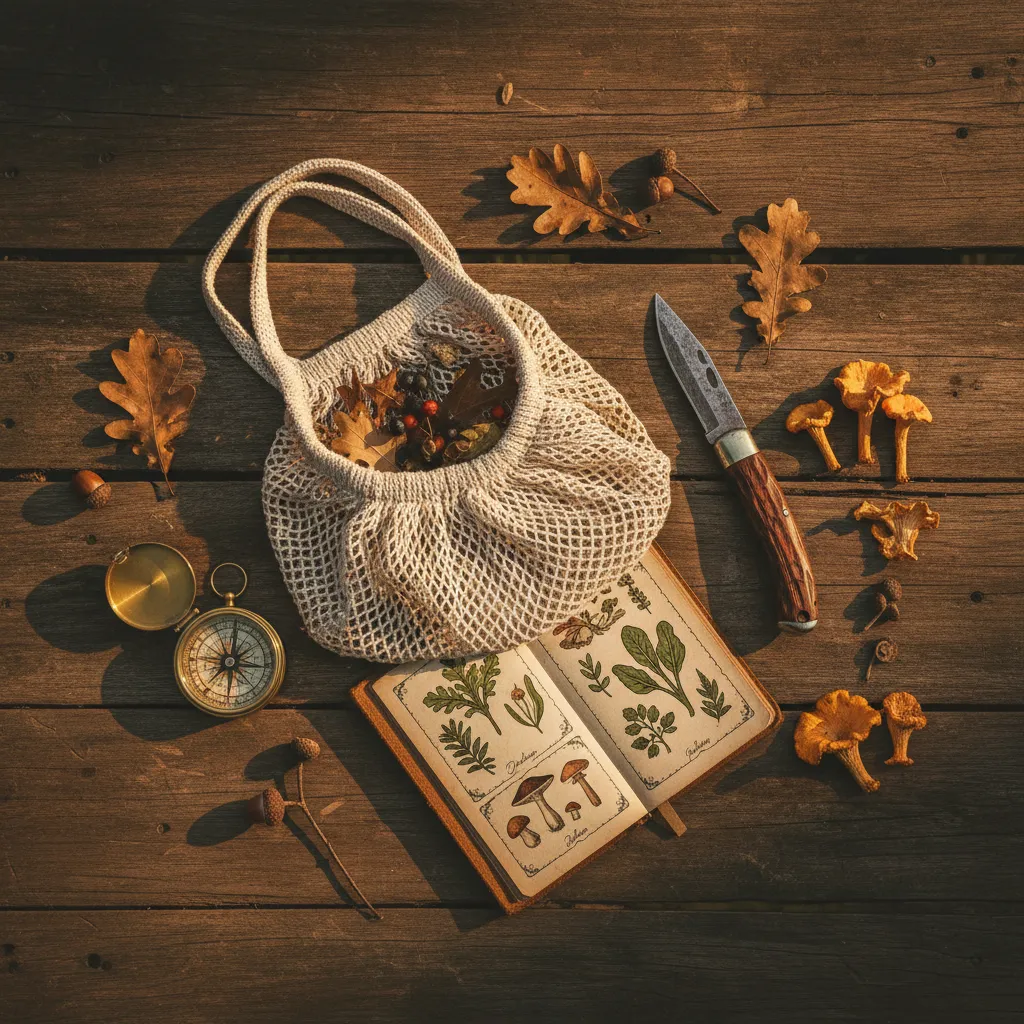
A good field guide. Mushrooms of Ontario and Eastern Canada by George Barron is the gold standard for this region. Mushrooms of the Northeast by Teresa Marrone and Walt Sturgeon is another excellent option. Get a physical book — cell service is unreliable in most foraging areas, and you can't reference a phone app when your battery dies in the bush.
A basket or mesh bag. Never use plastic bags — they trap moisture and accelerate decomposition. A wicker basket or mesh bag allows airflow and also lets spores fall through as you walk, helping replenish the forest.
A knife. A small folding knife for cleaning mushrooms in the field and cutting them at the base. The Opinel No. 8 is a classic choice — lightweight, sharp, and affordable. Cutting rather than pulling minimizes disturbance to the mycelium.
A compass or GPS device. Crown land foraging often means going off-trail. A compass and a basic understanding of how to use it can prevent a very bad day. Your phone's GPS works in airplane mode, but bring a physical compass as backup.
Bug spray. Ontario's blackflies (May-June) and mosquitoes (June-September) are legendary. DEET-based repellent is the most effective option.
Appropriate clothing. Long pants, sturdy boots, and a hat. Ontario bush is rough terrain — ankle-turning rocks, fallen logs, and the occasional encounter with poison ivy in southern regions.
A camera. Photograph every mushroom you plan to eat, from multiple angles, including the cap, gills/pores, stem, and habitat. This helps with identification at home and is invaluable if you need to consult an expert.
Mushrooms of Ontario and Eastern Canada (Field Guide)
The definitive field guide for Ontario foragers. Covers 600+ species with full-colour photos, habitat info, and edibility notes. By George Barron — the standard reference for Eastern Canadian mycology.
View on Amazon.ca →When you buy through our links, it supports our mycology research at no extra cost to you.
Safety Rules
Mushroom foraging can be dangerous if you don't follow basic safety principles.
The Cardinal Rules
Never eat a mushroom you can't identify with 100% certainty. "Pretty sure" isn't good enough. Several deadly species grow in Ontario, including Destroying Angel (Amanita bisporigera) and Death Cap (Amanita phalloides, increasingly reported in southern Ontario). There is no folk test, home remedy, or cooking method that makes a poisonous mushroom safe.
Start with easily identifiable species. Morels, chanterelles, chicken of the woods, giant puffballs, and hen of the woods all have distinctive features that make misidentification unlikely for a careful observer. Build your confidence with these before attempting more challenging species.
Learn from experienced foragers. Join a foray or club walk before heading out alone. Having an experienced person confirm your identifications in person is worth more than any book or app.
When in doubt, throw it out. No mushroom meal is worth a trip to the hospital. If you have even a flicker of uncertainty, leave it in the forest.
Try small amounts first. Even confirmed edible species cause reactions in some people. The first time you eat any new species, cook a small amount and wait 24 hours before eating more.
Always cook wild mushrooms. Very few wild species are safe raw, and many that are technically edible raw are significantly more digestible when cooked. Heat breaks down tough chitin cell walls and destroys many potential irritants.
Toxic Look-alikes to Know
False Morel (Gyromitra esculenta) — Brain-like (not honeycomb) cap, not hollow inside. Contains gyromitrin, which is potentially lethal. Found in similar habitats to true morels in spring.
Jack O'Lantern (Omphalotus olearius) — Orange mushroom that grows in clusters on wood. Sometimes confused with chanterelles, but Jack O'Lanterns have true gills (not false gills), grow on wood (chanterelles grow from soil), and glow faintly in the dark. Causes severe gastrointestinal distress.
Destroying Angel (Amanita bisporigera) — All-white mushroom with a cup-like volva at the base and a ring on the stem. Deadly. Learn to recognize Amanita features — white spore print, free gills, ring, and volva — and avoid all mushrooms with this combination.
Community and Resources
Ontario has a thriving foraging community. Getting connected is one of the best things you can do as a new forager.
Mycological Societies
- Mycological Society of Toronto — Regular forays, workshops, and speaker events. The largest mycological society in Ontario.
- Ottawa Mycological Society — Active group with regular forays in the Ottawa Valley.
- Mycological Society of Hamilton — Covers the Hamilton-Burlington-Niagara region with regular walks and identification workshops.
Facebook Groups
- Ontario Mushroom Foraging — Active group with thousands of members sharing finds, identification help, and location tips.
- Mushroom Identification Ontario — Focused specifically on ID help, with experienced identifiers who respond quickly.
- Southern Ontario Foraging — Broader foraging group covering mushrooms, plants, and berries.
Apps and Online Resources
- iNaturalist — Excellent for recording and getting community identification of your finds. Also useful for seeing what others have found in your area recently.
- Mushroom Observer — A dedicated mushroom identification platform with strong Canadian participation.
Sustainable Foraging Practices
The forest isn't a grocery store, and sustainable harvesting ensures these ecosystems continue to produce for generations.
- Take only what you'll use. It's exciting to find a flush of chanterelles, but harvesting more than you can eat or preserve is wasteful.
- Leave some behind. A good rule of thumb is to take no more than one-third of any patch you find. Leave the rest to spread spores and feed the forest ecosystem.
- Don't disturb the duff layer. The forest floor — the layer of decomposing leaves and organic matter — is where mycelium lives. Raking or digging through it damages the mycelial network that produces the mushrooms you're after.
- Vary your spots. Don't return to the same location repeatedly within a single season. Give patches time to recover and produce new fruit bodies.
- Cut, don't pull. Cutting mushrooms at the base with a knife causes less disturbance to the underlying mycelium than pulling them out.
From Forest to Kitchen
Once you've got a basket of confirmed, identified mushrooms, the work shifts from identification to preservation. Wild mushrooms are perishable — most should be cooked within 2-3 days of harvest.
Cleaning: Brush off debris with a soft brush or damp cloth. Avoid washing under running water unless absolutely necessary — mushrooms absorb water quickly. Cut away any insect-damaged sections.
Cooking: Always cook wild mushrooms. A simple saute in butter with salt is the best way to taste a new species for the first time. Don't drown delicate mushrooms in heavy sauces until you know what they taste like on their own.
Drying: A food dehydrator at 55°C (130°F) preserves most species beautifully. Dried mushrooms stored in airtight containers last a year or more. Chanterelles, morels, and porcini all dry exceptionally well.
Freezing: Cook mushrooms first (saute or blanch), then freeze in portions. Raw-frozen mushrooms become mushy when thawed.
Ontario foraging is a lifelong pursuit. The province's forests are vast, the species list is long, and every season brings something new. Start slow, learn carefully, forage responsibly, and enjoy one of the most rewarding outdoor activities this province has to offer.
If the off-season has you craving fresh mushrooms, remember that you can grow gourmet species year-round at home. Browse our grow kits, grain spawn, and growing supplies to keep the harvest going through the Canadian winter. And when foraging season returns, check out our mushroom foraging guide for British Columbia if you're planning a trip west.