
Lion's mane is one of those rare mushrooms that looks like it belongs in a fantasy novel — a shaggy, white cascade of icicle-like spines hanging from a hardwood trunk. But the real reason it's gained so much attention in the last decade has nothing to do with its appearance. It's the growing body of research suggesting this mushroom may support brain health, nerve function, and more.
Let's dig into what we actually know — what the science says, where the research is still early, and how to use lion's mane if you decide to try it.
What Is Lion's Mane?
Lion's mane (Hericium erinaceus) is an edible mushroom native to North America, Europe, and Asia. It grows naturally on dead or dying hardwood trees — particularly oak, maple, and beech — and has been used in traditional Chinese and Japanese medicine for centuries.
In the kitchen, lion's mane has a mild, slightly sweet flavour often compared to crab or lobster. It's a genuinely delicious culinary mushroom that holds up well when seared in butter or used as a seafood substitute.
But it's the potential health benefits that have turned lion's mane into one of the most popular functional mushrooms worldwide. Much of the interest centres on two families of compounds that appear to be unique to this species.
Key Compounds: Hericenones and Erinacines
Lion's mane produces two groups of bioactive compounds that researchers have focused on:
- Hericenones — found in the fruiting body (the part you can see and eat). At least eight different hericenones (A through H) have been identified.
- Erinacines — found primarily in the mycelium (the root-like network). Multiple erinacines have been isolated, with erinacine A being the most studied.
Both compound families have demonstrated the ability to stimulate the production of nerve growth factor (NGF) in laboratory studies. NGF is a protein that plays a critical role in the growth, maintenance, and survival of neurons. This NGF-stimulating property is what makes lion's mane unique among edible mushrooms and is the basis for most of the research that follows.
Additionally, lion's mane contains beta-glucans — polysaccharides found in many medicinal mushrooms — which are associated with immune-modulating properties.
Research on Cognitive Function and Memory
This is the area that draws the most interest, and there is a modest but growing body of human research.

The landmark study: In a double-blind, placebo-controlled trial, Mori et al. (2009) gave 30 Japanese adults (aged 50–80) diagnosed with mild cognitive impairment either lion's mane extract (250 mg tablets, three times daily) or a placebo for 16 weeks. The lion's mane group showed significantly improved scores on cognitive function tests compared to placebo at weeks 8, 12, and 16. However, scores declined after use was discontinued, suggesting ongoing use may be necessary to maintain benefits.
Additional research: A 2020 study by Saitsu et al. found that healthy adults over 50 who took lion's mane extract for 12 weeks showed improvements in certain cognitive test scores compared to placebo. Similarly, a 2023 study from the University of Queensland (Li et al.) identified that compounds in lion's mane promoted neurite outgrowth and enhanced memory in preclinical models.
What this means in plain language: There are encouraging signals that lion's mane may support cognitive function, particularly in older adults experiencing mild decline. But the human studies are still relatively small, and more large-scale trials are needed before definitive claims can be made. The research is promising — not conclusive.
Research on Nerve Regeneration
The NGF-stimulating properties of hericenones and erinacines have generated significant interest in nerve repair and neurological health.

Laboratory studies have shown that lion's mane extracts can stimulate the synthesis of NGF and promote the growth of nerve cells (neurite outgrowth) in cell cultures. Animal studies have demonstrated potential benefits for peripheral nerve regeneration — for example, a 2011 study by Wong et al. found that rats with crush-injured peripheral nerves showed faster recovery when given lion's mane extract.
A small 2020 pilot study on humans with peripheral neuropathy suggested possible improvements in pain and quality of life scores, though the study size was too small to draw firm conclusions.
The takeaway: Preclinical evidence for nerve-supportive properties is strong. Human evidence is still early-stage. This is an active area of research and one of the most exciting aspects of lion's mane science.
Research on Gut Health and Immune Function
Lion's mane may support digestive health through multiple mechanisms:
- Gut lining protection: Animal studies suggest lion's mane extract may help protect the gastric lining and support healthy gut mucosa. A 2015 study found that a lion's mane polysaccharide fraction reduced markers of gastric injury in mice.
- Microbiome support: Preliminary research suggests the polysaccharides in lion's mane may act as prebiotics, supporting beneficial gut bacteria populations.
- Anti-inflammatory properties: Several studies have identified anti-inflammatory compounds in lion's mane that may help modulate gut inflammation, though most of this research remains preclinical.
The beta-glucans in lion's mane, like those in other medicinal mushrooms, appear to interact with immune cells in the gut-associated lymphoid tissue (GALT), which plays a central role in immune regulation. Research suggests these compounds may help modulate immune response — supporting it when needed rather than simply "boosting" it.
Research on Mood and Anxiety
A 2010 study by Nagano et al. gave 30 women lion's mane cookies or placebo cookies for four weeks. The lion's mane group reported reduced feelings of irritation and anxiety compared to the placebo group, as measured by standardized questionnaires.
The mechanisms aren't fully understood, but researchers have proposed several possibilities: NGF support in brain regions associated with emotional regulation, anti-inflammatory effects that may influence neurochemistry, and potential support of hippocampal neurogenesis (the growth of new neurons in the hippocampus, a brain region involved in emotion and memory).
This is another area where the early results are interesting but more research is needed. If you're dealing with significant mood or anxiety concerns, work with a healthcare provider — lion's mane shouldn't be considered a substitute for professional mental health care.
How to Take Lion's Mane
If you'd like to incorporate lion's mane into your routine, here are general guidelines based on the existing research and traditional use:
Dosage: Most studies have used the equivalent of 1–3 grams of lion's mane extract per day. Start at the lower end and adjust based on your experience. Some people prefer to take it in the morning for cognitive support, though it doesn't contain caffeine or stimulants.
Duration: The Mori et al. study showed benefits building over 8–16 weeks of consistent use. Like most functional mushrooms, lion's mane isn't a one-dose-and-done product — consistency matters.
With food or without: Lion's mane can be taken with or without food. Some people find it easier on the stomach with a meal, but there's no strong evidence that timing affects efficacy.
Safety note: As with any new product, it's wise to consult with a healthcare provider before starting, especially if you're pregnant, nursing, taking medications, or have a diagnosed medical condition.
Available Formats Compared
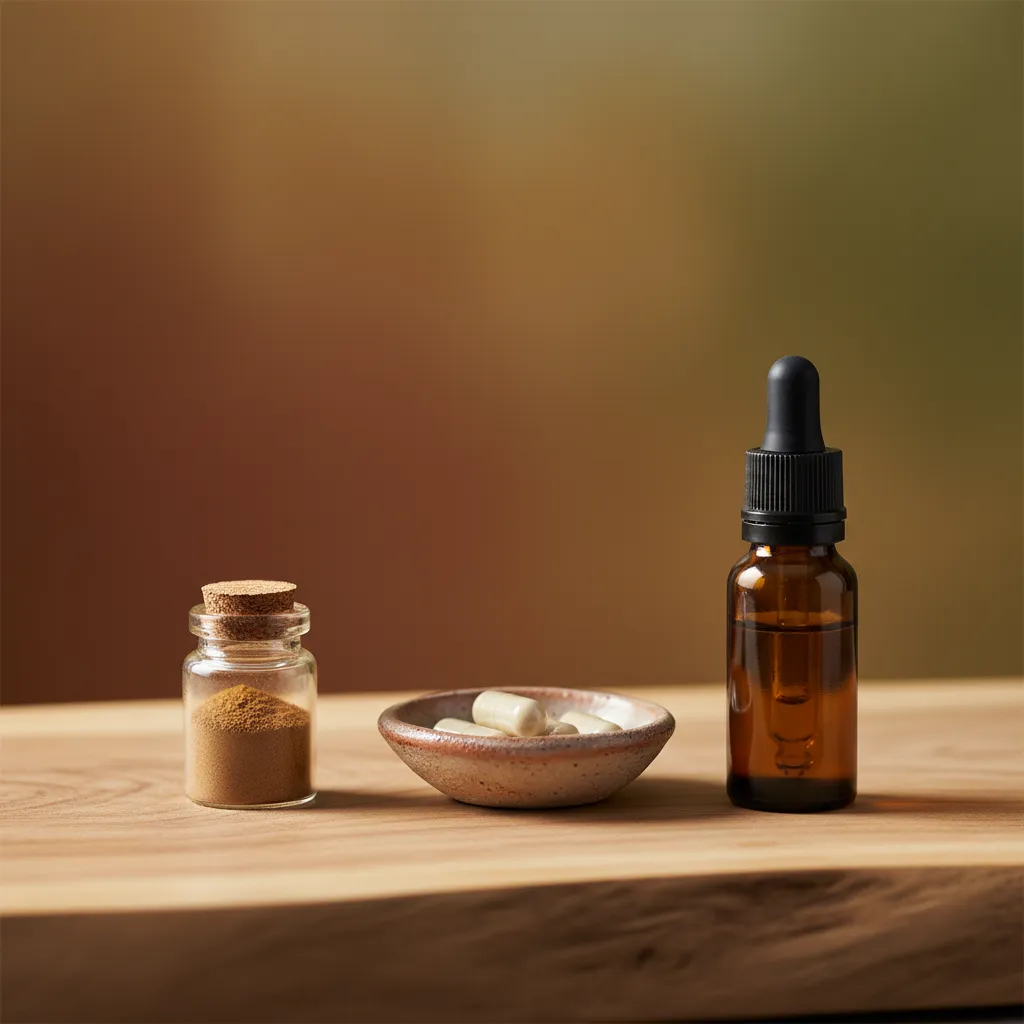
Lion's mane is available in several formats, each with trade-offs:
Powder
Our Lion's Mane Powder (60g) is pure dried lion's mane mushroom, milled into a fine powder. It's the most versatile format — you can add it to coffee, smoothies, soups, oatmeal, or just stir it into warm water. Practical how-to guides: our mushroom coffee recipe, matcha latte, smoothies, and daily-dose ranges per species.
Pros: Flexible dosing, easy to mix into foods and drinks, often the best value per gram Cons: Has a mild earthy taste that not everyone enjoys, requires measuring
Capsules
Our Lion's Mane Capsules (500mg) are pre-measured and tasteless — ideal if you want a no-fuss daily routine.
Pros: Convenient, precise dosing, no taste, portable Cons: Slightly higher cost per gram than powder, less flexible dosing
Tincture (Liquid Extract)
Our Lion's Mane Tincture (50ml) is a concentrated liquid extract, typically made using a dual-extraction process (hot water + alcohol) to pull out both water-soluble beta-glucans and alcohol-soluble hericenones.
Pros: Fast absorption, easy to add to drinks, dual-extraction captures a broader range of compounds Cons: Contains alcohol (usually small amounts), taste can be strong, smaller total servings per container
Mushroom Coffee
Our Lion's Mane Coffee combines lion's mane extract with coffee — a convenient way to get your daily mushroom dose and your caffeine in one step. For more on this category, see our mushroom coffee article, and for a research-focused breakdown of the cognition evidence, Coffee Studies covers lion's mane coffee in depth.
Pros: Replaces a habit you already have, great taste, combines caffeine with functional mushroom compounds Cons: Fixed dosing, not suitable if you don't drink coffee
Multi-Mushroom Blends
Our 5-Mushroom Capsules (500mg) combine lion's mane with other functional mushrooms like reishi, chaga, cordyceps, and turkey tail. Learn more about why blends can be effective in our five mushroom blend guide.
Pros: Broader spectrum of benefits from multiple species, convenient Cons: Lower dose of each individual mushroom, less targeted
For a deeper comparison of these formats, see our mushroom powder vs capsules vs tincture guide.
What to Look For in a Quality Product
Not all lion's mane products are created equal. Here's what to check before you buy:
Fruiting Body vs. Mycelium-on-Grain
This is the biggest quality differentiator in the mushroom product industry. Many cheaper products use "mycelium on grain" — mycelium grown on a bed of rice or oats, then dried and ground up, grain and all. The result is a product that's largely starch with a relatively small amount of actual mushroom compounds.
Look for products made from the fruiting body (the actual mushroom) or clearly labelled dual extracts. Our lion's mane products are made from fruiting bodies to ensure meaningful concentrations of hericenones and beta-glucans.
Extraction Method
Raw mushroom powder has its compounds locked inside tough chitin cell walls that human digestion can't fully break down. Hot water extraction is the minimum — it pulls out beta-glucans and other water-soluble compounds. Dual extraction (hot water + alcohol) also captures the alcohol-soluble hericenones and is considered the gold standard for lion's mane specifically.
Beta-Glucan Content
Quality products will list their beta-glucan content, typically 20% or higher for a good extract. Be wary of brands that list "polysaccharide" content instead — starch is a polysaccharide too, and mycelium-on-grain products can show high polysaccharide numbers that are mostly starch rather than bioactive beta-glucans.
Third-Party Testing
Reputable brands test for heavy metals, pesticides, and microbial contamination. Look for products that are transparent about their testing. Our products are produced at our CFIA-licensed facility in Brantford, Ontario, with full traceability.
Safety and Side Effects
Lion's mane is generally well-tolerated and has a long history of culinary use. It's eaten as food across Asia and is classified as safe for consumption.
That said, a few things to keep in mind:
- Allergies: Rare, but possible. If you have known mushroom allergies, start with a very small dose or avoid lion's mane entirely.
- Digestive sensitivity: Some people experience mild digestive discomfort when first starting lion's mane, particularly at higher doses. Starting low and increasing gradually usually resolves this.
- Blood clotting: Some in vitro research suggests lion's mane may have mild antiplatelet activity. If you're on blood thinners or have a bleeding disorder, consult your healthcare provider before use.
- Pregnancy and breastfeeding: Insufficient research to confirm safety during pregnancy or breastfeeding. Consult your healthcare provider.
The bottom line: For most healthy adults, lion's mane is considered safe at typical doses. But it's always wise to talk to your healthcare provider before adding any new product to your routine, especially if you have existing health conditions or take medications.
Growing Your Own Lion's Mane
If you're interested in having a fresh supply, lion's mane is one of the most rewarding mushrooms to grow at home. It does well on supplemented hardwood sawdust or masters mix, and the cascading white spines are genuinely beautiful to watch develop.
We have a full walkthrough in our how to grow lion's mane guide, covering everything from spawn selection to harvest timing. Growing your own means you get the freshest possible mushroom — and fresh lion's mane seared in butter with a pinch of salt is an experience everyone should have at least once.
Have a mushroom question? Dr. MycoThumb is our free AI mushroom expert — available 24/7 in the chat bubble at the bottom-right of every page.