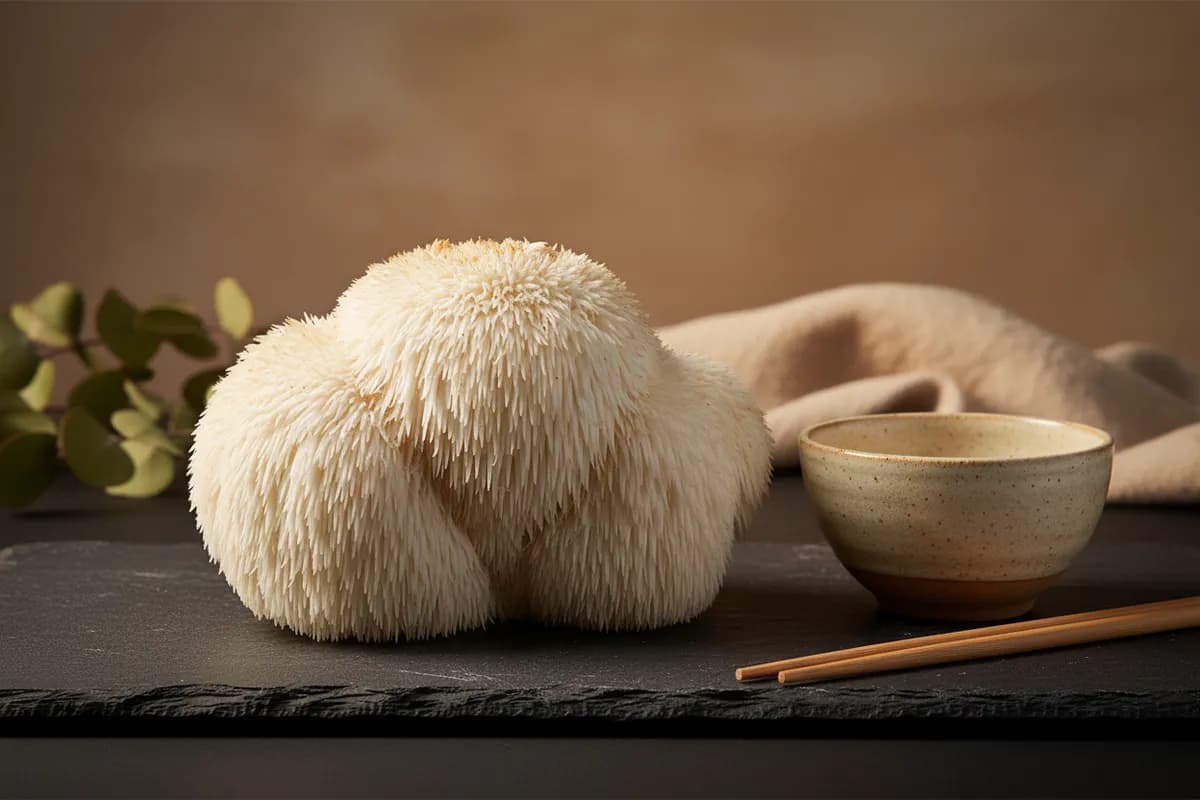
Lion's Mane (Hericium erinaceus) is the mushroom that converts skeptics. People who've never given a second thought to growing fungi see a picture of this shaggy, otherworldly organism and immediately want one. The good news: it's very growable at home. The slightly tricky news: it's pickier than oyster mushrooms about its environment, and the one thing it absolutely demands is fresh air.
This guide walks you through every method of growing Lion's Mane — from the simplest (a ready-to-fruit kit) to the most involved (starting from liquid culture). Everything here is based on what works for Canadian growers in Canadian homes.
Getting to Know Lion's Mane
Lion's Mane is a tooth fungus — instead of gills or pores, it produces long, cascading spines that give it the look of a white waterfall or, yes, a lion's mane. In the wild, it grows on dead or dying hardwood trees, particularly beech, maple, oak, and birch. If you live in Ontario, Quebec, or the Maritimes, you've probably walked past it in the forest without realizing it. It fruits from late summer through fall in Canadian hardwood forests, usually high up on standing dead trees.
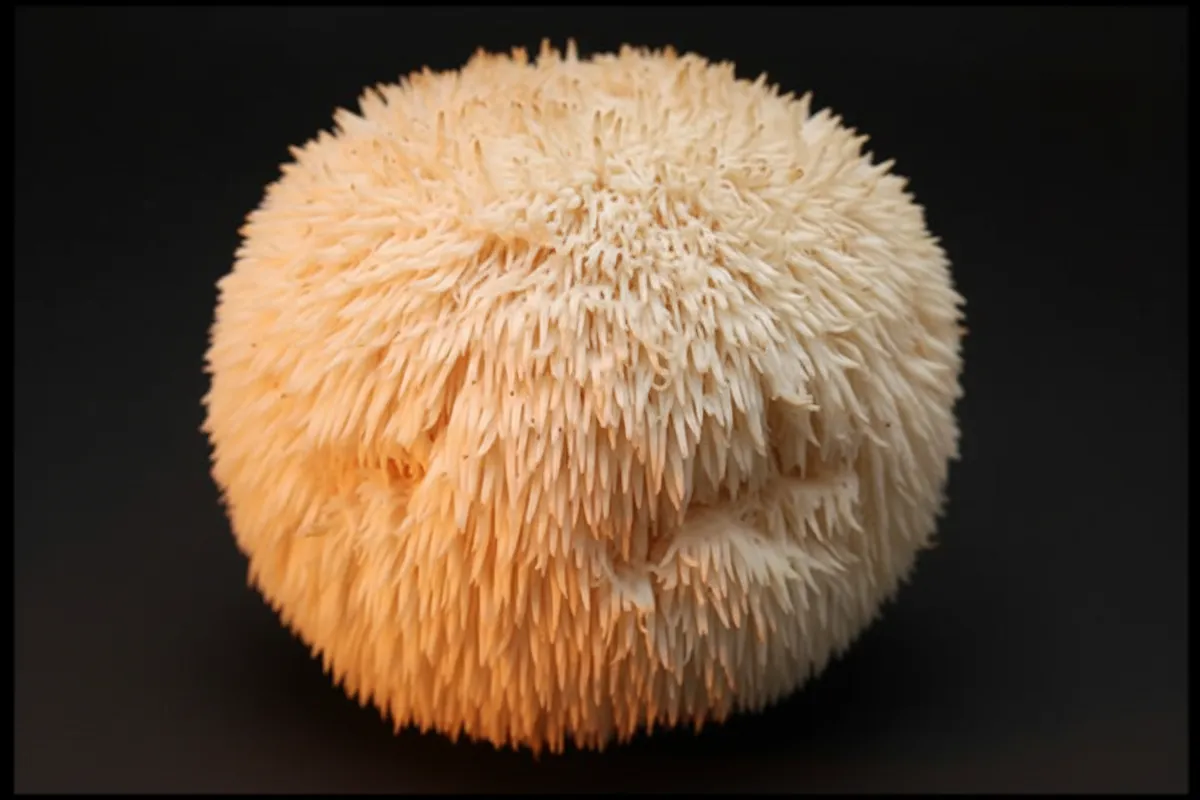
What's driven the surge of interest in Lion's Mane is the combination of exceptional culinary quality and a growing body of research around its potential health benefits — particularly for nerve health and cognitive function. For more on that side of things, see our post on Lion's Mane health benefits.
But let's talk about growing it.
Growing Conditions
Lion's Mane is a cool-weather species, which works nicely for most Canadian homes. Here's what it needs:
- Fruiting temperature: 16-20°C (60-68°F). This is the sweet spot. It can fruit a bit outside this range, but yields and quality drop. Most Canadian homes sit right in this window, especially in spring and fall.
- Humidity: 85-95% relative humidity. This is non-negotiable. Low humidity is the number one killer of Lion's Mane grows. The developing teeth dry out fast in dry air, turning brown and crispy at the tips.
- Fresh air exchange (FAE): High. This is where Lion's Mane differs most from oyster mushrooms. It is extremely sensitive to CO2 buildup. Insufficient fresh air produces the most common Lion's Mane defect — coral-like or brain-like growth instead of the characteristic hanging teeth.
- Light: Indirect ambient light. A room with a window is fine. Don't place it in direct sunlight.
- Substrate: Hardwood-based. Supplemented hardwood sawdust is the standard. It will not grow on straw.
The fresh air and humidity requirements create a real tension — you need to move air constantly, but moving air dries things out. Solving this tension is the core skill of growing Lion's Mane well.
Method 1: Grow Kit (Recommended Start)
If you haven't grown Lion's Mane before, start here. A Lion's Mane grow kit is a fully colonized block of supplemented hardwood sawdust. All the hard work — substrate preparation, sterilization, inoculation, colonization — is already done. You just need to trigger fruiting.
Step-by-step:
Unbox your kit. The block should be firm and mostly white. Some yellowish-brown patches on the surface are normal for Lion's Mane — it produces a pigment as it matures. What you don't want to see is green (Trichoderma contamination).
Cut an opening. Using a clean knife, cut a single X or a rectangular window (about 7-10 cm) in the bag. Lion's Mane fruits from a single point of opening, producing one large mass rather than multiple clusters. One opening is usually better than several.
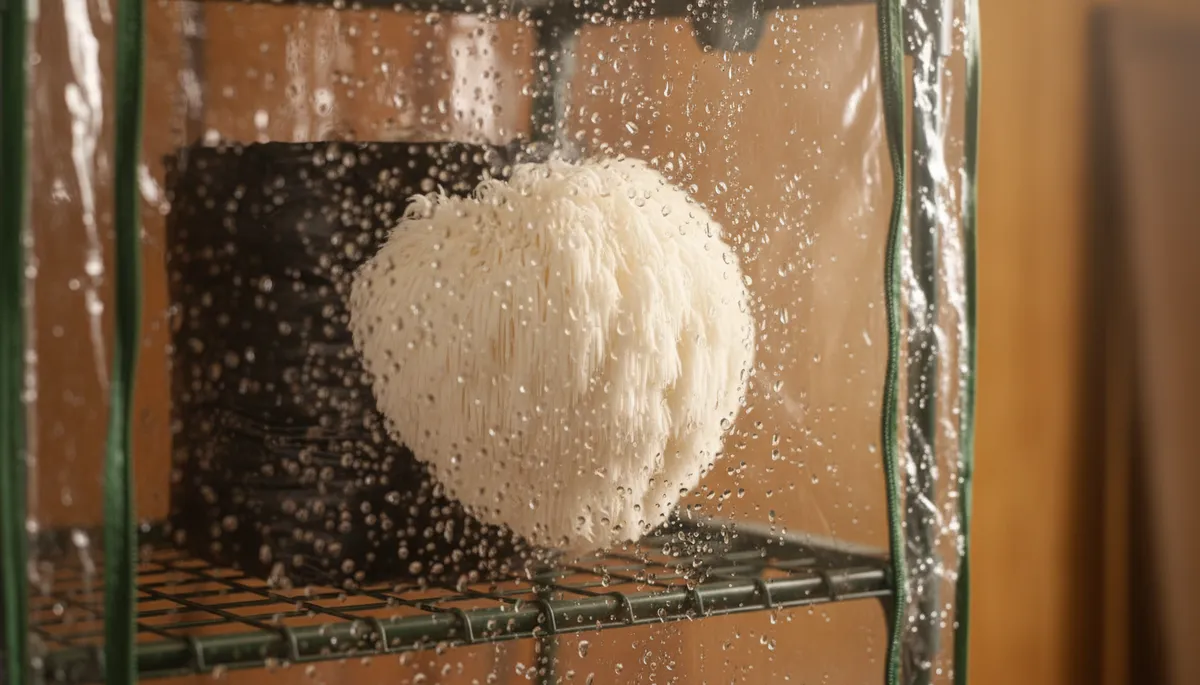
Create a humidity chamber. This matters more for Lion's Mane than any other species. Options:
- Simple: Place the kit on a plate, drape a clear plastic bag loosely over it (don't seal it — you need airflow), and mist inside the bag 3-4 times daily with a fine mist spray bottle.
- Better: Place the kit in a clear plastic storage container with the lid cracked open about 2 cm. Mist 2-3 times daily.
- Best: Use a Martha tent or humidity chamber with an ultrasonic humidifier. Set the humidifier on a timer — 5 minutes on, 15 minutes off works well for many setups.
Prioritize fresh air. Whatever humidity method you use, make sure air is moving. Fan the opening a few times each time you mist. If using a tent, ensure the bottom is open or the fan is cycling air.
Watch for primordia. Within 5-10 days, you'll see a small white mass forming at the opening. It may look like a bump, a blob, or a small cauliflower. This is the start of your Lion's Mane.
Maintain conditions through development. Over the next 5-7 days, the mass will grow larger and begin forming teeth — the hanging icicle-like spines. Keep humidity high and fresh air flowing. This is the critical period. If the teeth brown at the tips, increase humidity. If the growth stays rounded and coral-like without forming teeth, increase FAE dramatically.
Harvest. Your Lion's Mane is ready when the teeth are 1-2 cm long and the mushroom is still bright white. Don't wait for it to turn yellow — that means it's past peak. Grip the entire mass at the base and twist to remove it from the block.
Second flush. Soak the block in cold water for 2-4 hours. Return it to your humidity setup and resume care. The second flush typically produces a slightly smaller mushroom, and the block may produce a third flush as well.
A single kit typically yields 300-500g of Lion's Mane across all flushes. At retail prices of $30-50/kg, that's a solid return on a single kit.
Method 2: From Grain Spawn
Making your own Lion's Mane fruiting blocks from grain spawn gives you more mushrooms at a lower per-kilogram cost, and it teaches you the full cultivation process.
What you need:
- Lion's Mane grain spawn (5 lb bag)
- Hardwood fuel pellets (oak or maple, from a hardware store — make sure they're 100% hardwood with no binding agents)
- Wheat bran or soy hull pellets for supplementation
- Grow bags with filter patches
- A pressure cooker large enough for your bags (or an Instant Pot for smaller batches)
- A still air box (a clear plastic tub with arm holes — see our complete growing guide for details)
Substrate preparation:
The standard recipe for Lion's Mane is supplemented hardwood sawdust:
- 5 cups hardwood fuel pellets (dry)
- 1.4 litres water (boiling — this both hydrates and breaks apart the pellets)
- 1.25 cups wheat bran (or soy hull pellets)
Mix thoroughly. The pellets will crumble into sawdust as they absorb water. The final moisture should be at "field capacity" — when you squeeze a handful firmly, a few drops of water emerge but it doesn't stream. Adjust with small amounts of water if needed. Making multiple blocks? Our Bulk Substrate Calculator scales the recipe to any batch size so you don't have to do the math by hand.
The process:
Bag the substrate. Load the hydrated, supplemented sawdust into filter-patch grow bags. Aim for 2-3 kg of substrate per bag.
Sterilize. Pressure cook at 15 PSI for 2-2.5 hours. This is not optional — supplemented hardwood must be sterilized, not just pasteurized. Let the pressure drop naturally, then let the bags cool completely (at least 12 hours, ideally 24).
Inoculate. Working in front of a still air box, open each bag, crumble in grain spawn at roughly 5-10% of substrate weight, seal the bag, and shake or knead to distribute the spawn throughout.
Incubate. Store bags at 21-24°C (70-75°F) in a clean, dark space. Lion's Mane colonizes more slowly than oysters — expect 3-4 weeks for full colonization. The mycelium will appear white and somewhat wispy. It often develops a yellowish tinge toward the end of colonization — this is normal.
Initiate fruiting. Once the bag is fully colonized, cut one opening (a single X or window) and move to your fruiting area. Drop the temperature to 16-20°C (60-68°F) and provide humidity and fresh air as described above.
Grow, harvest, repeat. Follow the same fruiting and harvesting process as with a kit. Homemade blocks often produce larger first flushes than kits because you can make them bigger.
For a deeper comparison of substrate options, check our substrate guide and our breakdown of grain spawn vs liquid culture.
Method 3: From Liquid Culture (Advanced)
Starting from a Lion's Mane liquid culture means you're doing the entire cultivation cycle yourself — growing mycelium from a culture syringe, making your own grain spawn, and then using that spawn to inoculate substrate blocks. You can even expand a single syringe into litres of inoculant by following our honey liquid culture recipe.
This method is for growers who want maximum control and minimum cost per block. A single 3cc syringe of liquid culture can inoculate multiple jars of grain, each of which produces enough spawn for several fruiting blocks. The multiplication factor is enormous.
The basic workflow:
Prepare grain. Rinse and simmer whole rye, wheat, or millet grain. Drain and dry the surface. Load into mason jars or spawn bags with filter patches. Sterilize at 15 PSI for 90 minutes.
Inoculate grain. Using sterile technique (still air box, flame-sterilized needle), inject 0.5-1cc of liquid culture into each jar or bag through the injection port or filter patch.
Incubate. At 21-24°C (70-75°F), the grain will colonize over 2-3 weeks. Shake the jars once at about 30% colonization to speed things up.
Use as spawn. Your colonized grain is now spawn. Use it to inoculate supplemented hardwood blocks exactly as described in Method 2.
The main risk with liquid culture is contamination. If your sterile technique isn't solid, you'll lose grain jars to mould or bacteria. Practice with oyster mushrooms first — they're faster and more forgiving — before attempting Lion's Mane from liquid culture.
Fine Mist Spray Bottle — 2 Pack (500ml)
Lion's Mane demands consistent humidity. A quality fine-mist sprayer lets you add moisture without drenching the developing teeth. Keep one at your growing station and a spare ready.
View on Amazon.ca →When you buy through our links, it supports our mycology research at no extra cost to you.
Common Problems and Solutions
These are the issues we see most with Lion's Mane. Most of them are environment-related, not genetics or substrate issues.
Coral-like or cauliflower growth (no teeth forming)
Cause: Too much CO2. This is the single most common Lion's Mane problem, and it's almost always an airflow issue.
Fix: Dramatically increase fresh air exchange. Open up your tent, add a fan, or move the block to a more ventilated location. The current growth won't change shape, but new growth should develop teeth if conditions improve.
Brown, crispy tips on the teeth
Cause: Humidity too low. Lion's Mane teeth dry out fast, especially in Canadian winter when indoor air is extremely dry.
Fix: Increase misting frequency, upgrade your humidity setup, or add a humidifier. Use a hygrometer to verify your humidity is actually above 85%. Some growers run a small ultrasonic humidifier aimed directly at the growing surface. Trim off the brown tips — the mushroom will continue developing from the healthy tissue underneath.
Slow or stalled colonization
Cause: Usually temperature. Lion's Mane mycelium grows slowly below 18°C (64°F) and even slower below 15°C (59°F).
Fix: Move the colonizing block to a warmer spot. The top of a fridge or near (not on) a heat source can help. Incubation temperature should be 21-24°C (70-75°F). Colonization temperature is different from fruiting temperature — warmer for colonization, cooler for fruiting.
Yellowing before harvest
Cause: The mushroom is over-mature. Lion's Mane turns from white to cream to yellow to orange-brown as it ages.
Fix: Harvest earlier next time. Pick while it's still bright white with teeth at 1-2 cm. A slightly yellow Lion's Mane is still perfectly edible — it's just not at peak texture.
Contamination (green, black, or orange patches)
Cause: Non-sterile technique during inoculation, or a substrate that wasn't properly sterilized.
Fix: If it's on a grow kit, you can sometimes cut away a small contaminated area and still fruit the block. If it's on a homemade block that's still colonizing, discard it and review your sterilization process. See our complete growing guide for sterile technique basics.
Harvest Timing
This bears repeating because getting it wrong is the most common regret new Lion's Mane growers have: harvest while the teeth are 1-2 cm long and the mushroom is still white.
If you wait until the mushroom is massive and dramatically shaggy, you've waited too long. The texture becomes spongy and the flavour fades. Younger Lion's Mane has a firmer, meatier texture and a cleaner taste.
Cut or twist the entire mass off at the base. Don't try to take partial harvests — it damages the remaining tissue.
Cooking Lion's Mane
Lion's Mane has a texture and flavour often compared to lobster or crab — not in an "if you squint" kind of way, but in a way that genuinely surprises people.

The best way to cook it:
Tear, don't cut. Pull the mushroom apart into flat, steak-like slabs about 1.5 cm thick, following the natural grain of the flesh. Cutting with a knife compresses the texture; tearing preserves it.
Dry sear. Place the slabs in a hot, dry pan (no oil) and press them flat with a spatula. Cook for 2-3 minutes per side until golden and the moisture has cooked out. The surface should be crispy.
Add butter. Once both sides are seared, add butter (or olive oil), a pinch of salt, and a squeeze of lemon. Cook for another minute. The browned exterior and tender interior is genuinely remarkable.
Lion's Mane also works beautifully in soups, stir-fries, and as a pulled-meat substitute. Dried Lion's Mane rehydrates well for tea or broth. For the full recipe with step-by-step photos, see our Lion's Mane steak recipe.
Health Benefits (Brief Overview)
Lion's Mane has attracted significant research interest for compounds called hericenones and erinacines, which may stimulate nerve growth factor (NGF) production. Studies have explored potential benefits for cognitive function, nerve regeneration, and mood support. The research is promising but still developing — we think the culinary qualities alone justify growing it, and any health benefits are a bonus.
For a thorough look at the science, see our dedicated post on Lion's Mane health benefits.
Lion's Mane is one of the most rewarding mushrooms to grow. It demands a bit more attention than oysters, but the payoff — both in the kitchen and in the satisfaction of producing this incredible organism — is absolutely worth it.
Ready to start? Grab a Lion's Mane grow kit for your first grow, or jump to grain spawn if you're ready to make your own blocks. For the full cultivation cycle, start with a Lion's Mane liquid culture and work your way up.
Want to grow this species? Dr. MycoThumb is our free AI growing assistant — ask about growing conditions, substrate recipes, troubleshooting, and more. Available 24/7 in the chat bubble at the bottom-right of every page.